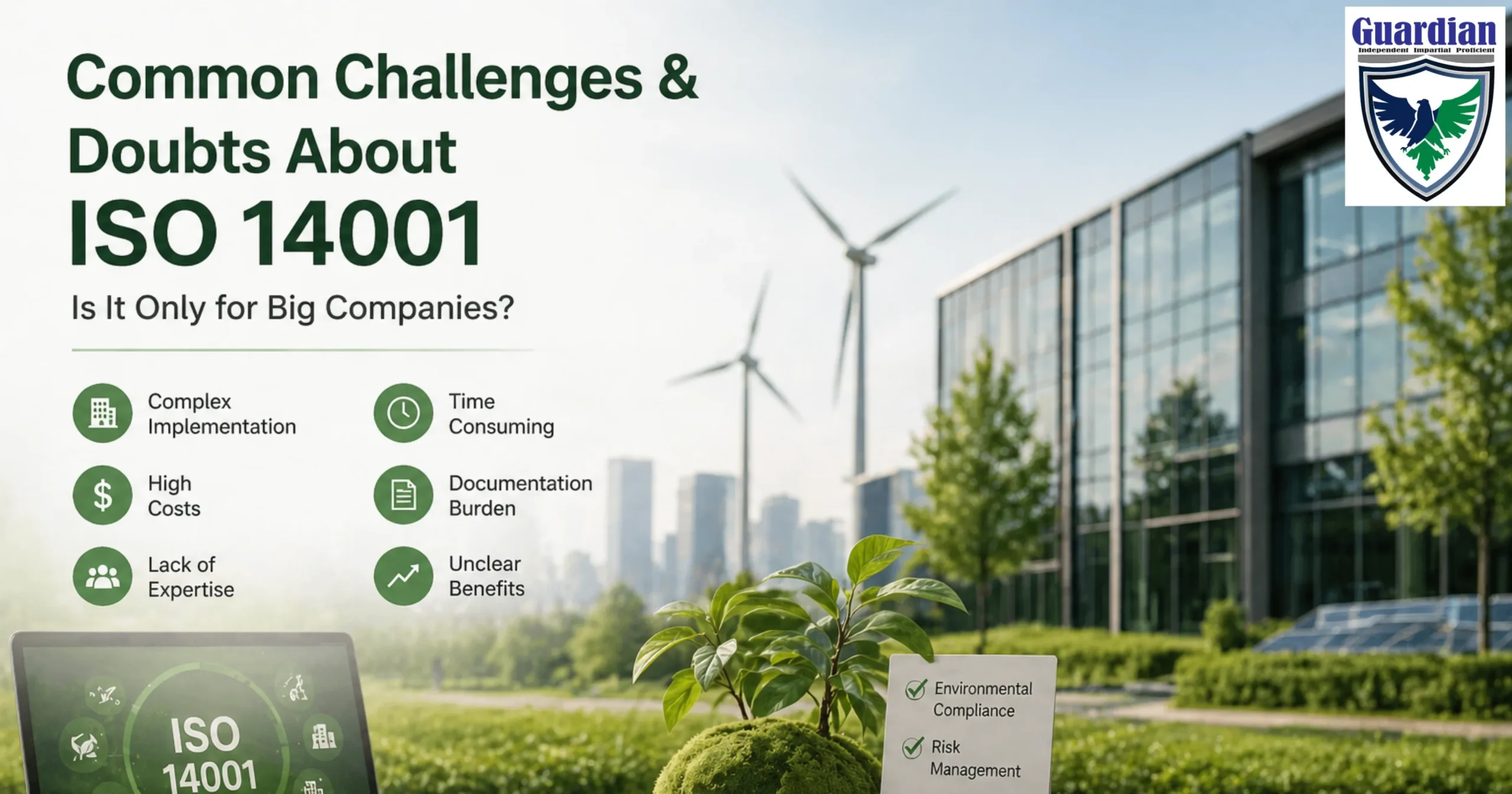
Common Challenges & Doubts About ISO 14001 – Is It Only for Big Companies?
In today’s world, more businesses are exploring ways to manage their environmental responsibilities effectively. ISO 14001 certification, which defines the requirements for an Environmental Management System (EMS), is widely recognized as a practical framework for this purpose. Yet many organizations, especially smaller ones, hesitate before taking the plunge. One doubt comes up again and again: “Is ISO 14001 only meant for big companies with huge resources and dedicated teams?”
The short answer is no. ISO 14001 is designed to be flexible and scalable for organizations of all sizes and sectors. However, real challenges and misconceptions often create barriers. This guide covers the most frequent doubts, practical hurdles in ISO 14001 implementation, and actionable ways to overcome them. Whether you run a manufacturing unit, a construction firm, or a service-oriented business, understanding these issues helps you decide if EMS certification aligns with your goals.
Not just for big companies: The EMS can be scaled to your size and impact.
Most hurdles are practical: Time, knowledge, and change management.
Best approach: Start small, integrate into existing work, improve step by step.
Table of Contents
- Understanding ISO 14001 and Why Doubts Arise
- Myth: ISO 14001 Is Only for Big Companies
- Common Challenges in ISO 14001 Implementation
- Addressing Doubts: Is It Too Expensive or Time-Consuming?
- Overcoming Challenges: Practical Strategies
- ISO 14001 for Different Sectors
- How to Reduce Environmental Impact with ISO 14001
- The Certification Process in Brief
- Debunking Other Common Myths
- Long-Term Value of EMS Certification
- Conclusion: Making an Informed Decision
- Frequently Asked Questions (FAQs)
Understanding ISO 14001 and Why Doubts Arise
What is ISO 14001? It is the international standard that helps organizations establish, implement, maintain, and continually improve an Environmental Management System. The focus is on identifying environmental aspects and impacts, meeting applicable requirements, and driving continual improvement through the Plan-Do-Check-Act (PDCA) cycle.
ISO 14001 certification demonstrates that your business systematically manages its environmental responsibilities. It is not a one-time event. It is an ongoing commitment to reducing negative environmental impact while supporting operational efficiency.
Doubts usually surface because many people associate formal management systems with large corporations that have deep budgets and full-time specialists. In reality, ISO 14001 uses flexible requirements that smaller organizations can apply proportionally. The clauses cover context, leadership, planning, support, operation, performance evaluation, and improvement. These elements can be scaled according to business size, risk, and complexity.
Myth: ISO 14001 Is Only for Big Companies
This is one of the most persistent myths about ISO 14001. The standard applies to any organization, regardless of size, type, or industry. A small workshop, a mid-sized construction company, or a service provider can all benefit from a well-designed EMS.
Why does this myth persist? Large organizations often promote their certifications more visibly, so people assume only big operations need structured systems. But even businesses with smaller impacts, such as offices generating waste or using energy, can identify aspects like paper consumption, electricity usage, and supplier-related impacts and manage them effectively.
The flexibility built into ISO 14001 requirements allows smaller businesses to focus on what matters most without unnecessary bureaucracy. The key idea is proportionality: your EMS should reflect the scale and nature of your operations.
Common Challenges in ISO 14001 Implementation
Implementing any management system brings hurdles, and ISO 14001 is no exception. Below are common challenges, especially for organizations with limited resources.
Resource Constraints and Budget Concerns
Many businesses fear that building and maintaining an EMS will drain finances and staff time. Initial work includes learning the standard, identifying aspects and impacts, developing controls, training people, and preparing for audits. For small teams already stretched thin, this can feel overwhelming.
The practical counterpoint is that many organizations offset effort over time through reduced waste, better resource control, fewer incidents, and stronger discipline around day-to-day environmental responsibilities.
Lack of Top Management Commitment
Without visible support from leadership, initiatives lose momentum. ISO 14001 expects leadership to integrate environmental management into business processes. When leaders treat EMS as a side project for one person, the system rarely becomes part of daily operations.
Limited Internal Expertise
Not every organization has environmental specialists. Interpreting clauses, identifying significant aspects, or conducting internal audits can feel difficult without experience. This knowledge gap often leads to hesitation or over-reliance on external help.
Resistance to Change Among Employees
Staff may view new procedures, documentation, or targets as extra work. Fear of the unknown or perception of bureaucracy slows adoption. Clear communication and involvement from the beginning helps reduce resistance and builds ownership.
Difficulty in Identifying and Prioritizing Environmental Aspects
Pinpointing how operations interact with the environment, and deciding which impacts are significant, requires thoughtful analysis. Some organizations struggle here and either over-document everything or miss critical areas.
Documentation and Record-Keeping Burden
Some teams worry ISO 14001 means excessive paperwork. While records are important, modern EMS practice is to keep documentation practical and value-adding. Integrating with existing systems reduces duplication and keeps the system manageable.
Maintaining Continual Improvement
Certification is the beginning. Sustaining performance evaluation, internal audits, management reviews, and corrective actions requires discipline. Many organizations do well initially but struggle to keep the system active long-term without a clear routine.
Balancing Compliance with Practical Operations
Understanding legal and other requirements while keeping them aligned with practical workflows can be tricky, especially when rules evolve. The aim is to integrate compliance checks into normal work rather than treat them as separate events.
Addressing Doubts: Is It Too Expensive or Time-Consuming?
A frequent question is whether ISO 14001 certification is practical for smaller operations. While there can be upfront costs related to training, system development, and audit readiness, many organizations report operational savings over time through improved resource use, fewer incidents, and better efficiency.
Time concerns often come from treating implementation like a large parallel project. In practice, integrating environmental actions into existing processes such as procurement, operations, and maintenance reduces extra workload. ISO 14001 does not prescribe specific methods or technologies, so you choose the level of detail that fits your context. This flexibility helps avoid over-engineering.
Overcoming Challenges: Practical Strategies
Below are practical approaches that help organizations reduce friction and keep implementation realistic.
Secure Leadership Buy-In Early
Present benefits such as risk reduction, operational control, improved reputation, and stronger stakeholder confidence. When leaders visibly support the initiative and allocate appropriate resources, teams move faster and resistance reduces.
Build Knowledge Incrementally
Start by reviewing the standard clauses and appointing an internal coordinator. Use targeted training for key personnel rather than broad, expensive programs. Many organizations mix self-learning with limited external guidance for areas like aspect identification or internal auditing.
Adopt a Phased Approach
Break implementation into manageable stages: understand context and requirements, identify aspects and impacts, set objectives, define operational controls, train staff, run the system, then audit internally before certification audits. This reduces overwhelm and builds experience along the way.
Focus on Integration
If you already follow other management standards, integrate ISO 14001 with them. Many clauses share similar structures, so integrated systems reduce duplication in internal audits, management review, and documentation control.
Simplify Documentation
Create only what adds value. Policies, procedures, objectives, and records should be practical and easy to use. Digital tools help manage records without creating paperwork overload.
Engage Employees Actively
Involve staff in identifying aspects from daily work and recognize improvement ideas. When people understand why the system exists and how it helps, adoption becomes smoother and resistance reduces.
Seek Proportionate External Support When Needed
External support can accelerate implementation by providing structure, templates, and training. Choose partners who understand scalable implementation and do not push unnecessary complexity.
Emphasize Continual Improvement from Day One
Treat the EMS as a living framework. Small, achievable targets and regular review keep momentum alive and show progress clearly.
ISO 14001 for Different Sectors
ISO 14001 can be applied across sectors when tailored to the organization’s activities. Manufacturing often focuses on emissions, waste streams, and resource consumption in production. Construction can address site waste, dust, noise, and responsible sourcing. Service businesses may focus on energy use, paper consumption, and supplier-related impacts.
The standard’s generic structure is what makes it adaptable. The key is applying it thoughtfully rather than copying someone else’s system.
How to Reduce Environmental Impact with ISO 14001
The core strength of ISO 14001 is its systematic approach. By identifying significant aspects, setting objectives, monitoring performance, and taking corrective action when needed, organizations often achieve measurable reductions in waste, energy use, and emissions. The process encourages preventive thinking rather than reactive fixes, which supports sustainable improvement.
The Certification Process in Brief
The ISO 14001 certification process generally includes:
- Understanding requirements and completing a gap analysis
- Developing and implementing the EMS (policy, objectives, controls, records)
- Training and awareness
- Internal audit and management review
- Stage 1 and Stage 2 certification audits by an accredited certification body
The timeline depends on readiness, size, and complexity, but structured planning keeps the effort realistic.
Debunking Other Common Myths
“It’s all about paperwork and bureaucracy.”
Effective EMS focuses on operational control and improvement, not documents for their own sake. Well-designed systems can streamline work by making responsibilities and routines clearer.
“We are already compliant with laws, so we don’t need it.”
Legal compliance is important, but ISO 14001 provides a framework to identify, monitor, and improve systematically, which reduces risk of drift and supports continual improvement beyond minimum requirements.
“Only organizations with big environmental impacts need it.”
Every organization interacts with the environment. Managing even smaller aspects systematically can deliver real benefits, including better resource control and stronger stakeholder trust.
Long-Term Value of EMS Certification
Organizations that move past initial challenges often find that an EMS improves decision-making, strengthens stakeholder trust, and builds resilience against changing expectations. Environmental management shifts from being a sporadic concern to an integrated part of business strategy.
Conclusion: Making an Informed Decision
ISO 14001 is not reserved for large corporations. With scalable requirements and continual improvement focus, it offers practical value to businesses of different sizes seeking to manage environmental responsibilities systematically. Common challenges like resource limitations, knowledge gaps, resistance to change, and documentation concerns are real, but they can be addressed through leadership commitment, phased implementation, employee involvement, and proportionate support.
If your organization wants to reduce environmental impact, improve efficiency, and demonstrate credible commitment to sustainability, ISO 14001 certification can be a worthwhile step. The key is aligning the system with your business realities rather than forcing a one-size-fits-all model. Taking the first steps toward a structured EMS often proves more manageable and rewarding than anticipated.
Frequently Asked Questions (FAQs)
Ans) No, ISO 14001 certification is voluntary. However, some clients, supply chains, or tender requirements may expect or prefer it. Many organizations pursue it to improve performance and demonstrate commitment rather than because of a legal mandate.
Ans) It can feel challenging due to limited resources, but the standard is flexible. With a phased approach, internal champion, and focus on high-priority areas, smaller organizations successfully achieve certification. Integration with existing processes helps reduce the burden.
Ans) It requires sufficient documentation to prove that your EMS is planned, implemented, and maintained effectively. The emphasis is on practical records that support operations and continual improvement rather than excessive paperwork. Many organizations keep it lean and effective.
Ans) Yes. The high-level structure makes integration straightforward. Combining ISO 14001 with quality or other management systems reduces duplication in areas such as internal audits, management reviews, and documentation.
Ans) The timeline depends on your starting point, size, and complexity. Organizations with some environmental practices in place may take 6–12 months, while others need more time for full implementation and readiness. Proper planning and leadership support accelerate the ISO 14001 certification process.