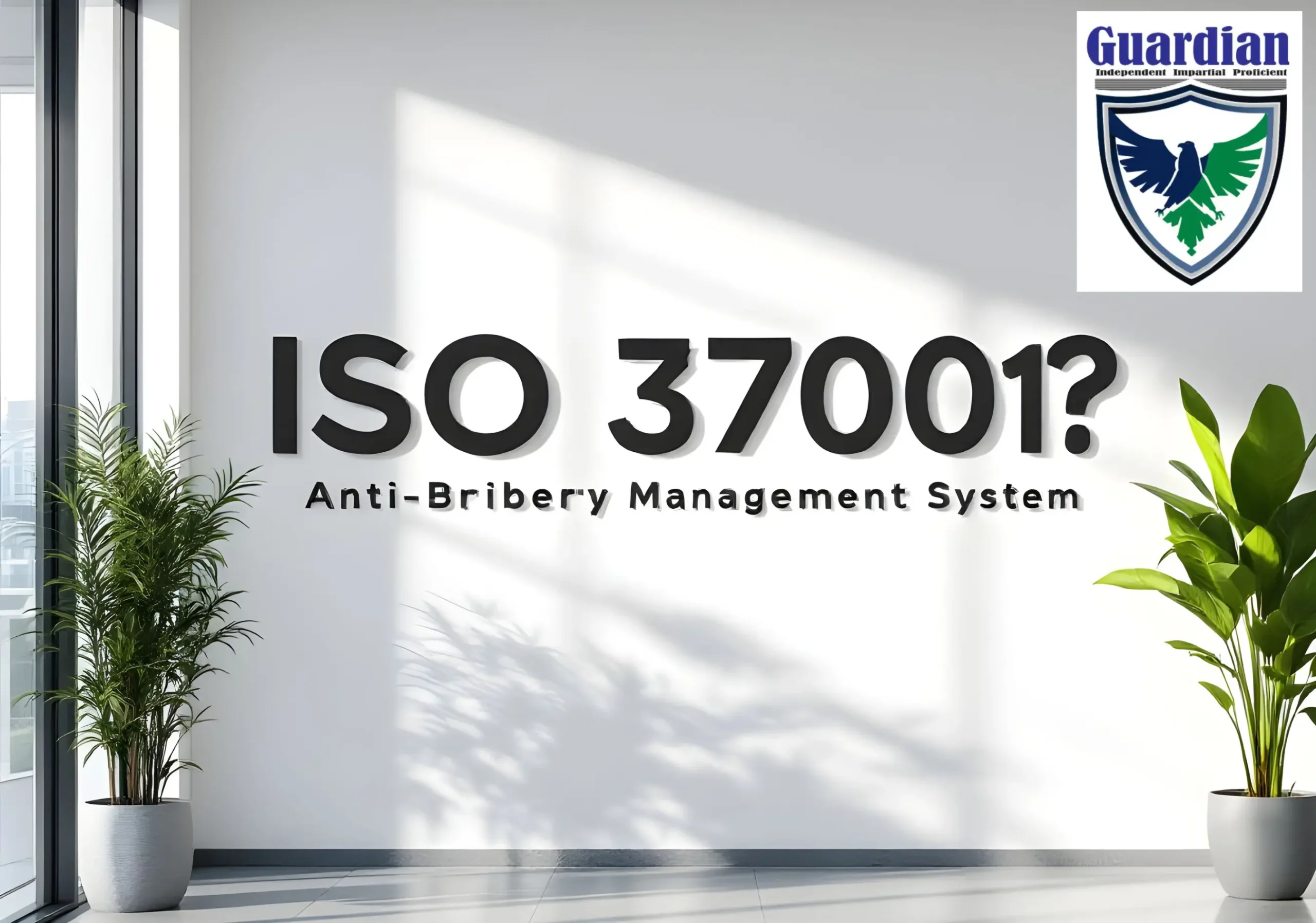
What is ISO 37001? Anti-Bribery Management System Explained
Bribery is a big problem. It hurts trust, ruins reputations, and makes business unfair. But how can a company prove it is doing everything possible to stop bribery? This is where ISO 37001 certification comes in.
You might have heard this term in meetings or seen it inside contract requirements. But what does it actually mean? Is it just a piece of paper, or is it something more? This guide explains ISO 37001 in very simple language: how an anti-bribery management system works, what the requirements are, and how it helps protect organizations.
What it is: An international standard for an Anti-Bribery Management System (ABMS).
What it helps with: Preventing, detecting, and responding to bribery risks.
Who can use it: Any organization: private, public, or non-profit, big or small.
Table of Contents
- What is ISO 37001?
- What Does ISO 37001 Stand For?
- Who is it for?
- Understanding the Anti-Bribery Management System (ABMS)
- The Core Elements of an ABMS
- The Structure of the Standard (High-Level Structure)
- ISO 37001 Requirements Clause-by-Clause
- Key Definitions to Know
- The “Reasonable and Proportionate” Rule
- How Guardian Assessment ISO 37001 Helps
- ISO 37001 vs. Other Standards
- The Myth of the “Paper Shield”
- Why Do We Need an ISO Anti-Bribery Standard?
- Deep Dive into Risk Assessment
- Summary of the ISO 37001 Framework
- Final Thoughts: Why ISO 37001 Matters for Ethical Business
- Frequently Asked Questions (FAQs)
What is ISO 37001?
Let’s start with the most basic question: What is ISO 37001?
Imagine you want to build a house. You don’t just start stacking bricks. You need a blueprint. You need a plan that follows safety rules so the house doesn’t fall down.
ISO 37001 is like a blueprint for stopping bribery. It is an international standard created by the International Organization for Standardization (ISO). It gives organizations a set of rules and guidelines to build an anti-bribery management system (ABMS).
The standard was published in 2016. Before that, there was no single global rulebook for fighting bribery. Today, organizations in many sectors use the ISO 37001 framework to show they take ethics seriously.
What Does ISO 37001 Stand For?
When people ask “what does ISO 37001 stand for,” they usually mean what its purpose is. In simple terms, it stands for a commitment to clean business. It stands for saying “no” to corruption.
ISO 37001 is designed to help an organization:
- Prevent bribery from happening.
- Detect bribery if it does happen.
- Respond to bribery quickly and effectively.
Important note: ISO 37001 does not guarantee bribery will never happen. No system can guarantee that. What it shows is that the organization has taken “reasonable and proportionate” steps to reduce the risk and deal with problems properly. Think of it like a seatbelt: it doesn’t guarantee you won’t crash, but it makes you safer if you do.
Who is it for?
One of the best things about this anti-corruption standard is that it can work for almost any organization. It doesn’t matter if you run a small business or a large enterprise.
ISO 37001 can be used by:
- Large corporations
- Small and Medium Enterprises (SMEs)
- Public sector organizations (government)
- Non-profit organizations (charities)
The ISO 37001 definition is flexible. It allows you to adjust the rules to fit your size and your bribery risk.
Understanding the Anti-Bribery Management System (ABMS)
We keep mentioning the ABMS. But what is an anti-bribery management system really?
Think about your body. You have an immune system. Your immune system has different parts, like white blood cells and antibodies, that work together to fight off sickness.
An ABMS is like an immune system for your company. It is a collection of policies, procedures, and controls that work together to fight off bribery risk. It is not one rule. It is a complete system and culture.
The Core Elements of an ABMS
A strong anti-bribery system has multiple moving parts. Here are the main building blocks:
The Policy: A clear written statement that says “We do not bribe.”
The People: Everyone from top management to new staff needs to understand expectations.
The Training: Practical awareness to spot bribery risks (including non-cash forms).
The Risk Assessment: Identify where bribery could happen and how likely it is.
The Checks (Controls): Safeguards like approvals, segregation of duties, and review points.
The Reporting: Safe reporting methods (whistleblowing) and proper investigation steps.
The Structure of the Standard (High-Level Structure)
The ISO 37001 framework follows a structure you may recognize if you have seen ISO 9001 or other ISO standards. This is called the “High-Level Structure.” It helps organizations integrate systems easily (for example, combining quality and anti-bribery systems).
ISO 37001 Requirements Clause-by-Clause
Now let’s break down the ISO 37001 requirements clause by clause, in plain language.
Clause 4: Context of the Organization Before fixing bribery risk, you must understand your situation. This part asks: Who are you, where do you operate, who are your stakeholders, what laws apply, and what is the scope of your ABMS? You also must conduct a bribery risk assessment: Where could bribery happen (permits, procurement, hiring, sales, third parties)?
Clause 5: Leadership The system cannot work if top management does not care. Leaders must show commitment, approve a clear anti-bribery policy, assign responsibilities, and ensure the ABMS has authority. A board (if present) should oversee performance. A responsible function should have the power to stop risky deals.
Clause 6: Planning Based on your risks, you plan actions and set objectives. Objectives should be measurable, like “Train 100% of sales staff by December” or “Complete due diligence for all high-risk third parties.”
Clause 7: Support You must provide resources, competent people, training, awareness, communication, and documentation. Training is essential because bribery is not always cash. It can be gifts, travel, jobs for relatives, or hidden benefits through third parties.
Clause 8: Operation This is the core “day-to-day controls” part. It includes due diligence on business associates, financial controls (approvals, segregation of duties), non-financial controls (procurement rules, hiring rules), rules for gifts/hospitality, whistleblowing channels, and investigation procedures. You don’t have to ban all hospitality, but it must be reasonable and controlled.
Clause 9: Performance Evaluation You must monitor performance, conduct internal audits, and do management review. Track training completion, incident reports, and risk control effectiveness. Internal audits check whether people actually follow your rules, not just whether the policy exists.
Clause 10: Improvement Fix issues and prevent recurrence through corrective actions. Continual improvement is expected, meaning the ABMS should become stronger over time.
Key Definitions to Know
What is bribery?
In ISO 37001, bribery is defined broadly. It includes offering, promising, giving, accepting, or asking for an “undue advantage.” That advantage can be financial or non-financial, direct or indirect, and intended to make someone perform improperly.
What is a business associate?
A business associate is anyone you do business with: customers, suppliers, contractors, partners, consultants, agents, or joint venture partners. Many bribery risks come through third parties, so your ABMS must cover them.
What is a public official?
A public official is a person who works for government: politicians, judges, police, regulators, and government staff. Bribery involving public officials is usually high-risk and treated very seriously.
The “Reasonable and Proportionate” Rule
This is one of the most important concepts in ISO 37001. It means your controls should match your risk.
Simple meaning: If your bribery risk is low, your system can be simple. If your bribery risk is high, your system must be stronger and more detailed.
Example:
- A small bakery might only need a short policy, basic training, and simple controls.
- A construction company dealing with permits and large public contracts may need strict due diligence, detailed approvals, and strong monitoring.
How Guardian Assessment ISO 37001 Helps
Many organizations feel ISO 37001 looks like a lot of work, and it can be if you do it without guidance. This is where expert partners like Guardian Assessment can support.
Guardian Assessment anti-bribery management focus: Practical, real-world application instead of only paperwork.
Scope support: Helping identify which areas need stronger controls so you don’t waste time on low-risk items.
Clarifying requirements: Turning standard language into actions teams can follow.
External perspective: Helping uncover risks you may miss internally, especially with third parties and process gaps.
ISO 37001 vs. Other Standards
ISO 37001 vs. ISO 9001
ISO 9001 focuses on quality management and customer satisfaction. ISO 37001 focuses on anti-bribery controls and ethical conduct. Because they share the High-Level Structure, many organizations integrate both systems.
ISO 37001 vs. laws
ISO 37001 is not a law. It is voluntary. However, many countries have strict anti-bribery laws. Using ISO 37001 helps support stronger internal controls and demonstrates that an organization has taken structured steps to reduce bribery risk.
The Myth of the “Paper Shield”
Some people think if they write a policy and put it in a drawer, they are safe. This is wrong. ISO 37001 is about action, not just paper.
During checks, auditors do not only read documents. They interview staff, review records, check payment processes, and verify whether due diligence is actually happening. If your policy says “We check all suppliers,” but your due diligence files are empty, the system is not working.
Why Do We Need an ISO Anti-Bribery Standard?
In the past, every organization had its own idea of what “anti-bribery” meant. One company banned cash payments. Another set gift limits. Another did nothing. This made trust difficult, especially in supply chains.
ISO 37001 created a common language and common expectations. When an organization follows ISO 37001, it means they have risk assessment, training, due diligence, controls, and monitoring in place. That increases confidence between partners and across borders.
Deep Dive into Risk Assessment
Risk assessment is a foundation of an anti-bribery management system. The standard expects you to identify risks, document them, and decide how to treat them.
Common risk factors to consider:
- Country risk: Some locations have higher corruption exposure than others.
- Sector risk: Certain industries face higher bribery risks, such as construction, mining, and large public procurement.
- Transaction risk: Sponsorships, donations, and high-value deals may need extra review.
- Partnership risk: Third-party agents are a major risk area because bribery can happen indirectly.
The idea is simple: high risks need stronger controls, closer monitoring, and faster action. Low risks may require simpler controls and periodic review.
Summary of the ISO 37001 Framework
Here’s a clean recap in a simple list. A strong ISO 37001 system typically includes:
- Define scope and context
- Assess bribery risks
- Leadership commitment and clear responsibilities
- Objectives and planning
- Training and resources
- Operational controls (financial and non-financial)
- Due diligence on business associates
- Whistleblowing and investigation process
- Monitoring, audits, and management review
- Corrective actions and continual improvement
Final Thoughts: Why ISO 37001 Matters for Ethical Business
ISO 37001 is not a magic wand that instantly stops bribery. It is a tool. It gives a structured way to manage bribery risk, reduce exposure, and respond properly when issues appear.
The ISO 37001 requirements may look detailed, but they are mostly common sense applied systematically: know your risks, train your people, control payments, check third parties, and keep improving.
Final message:
When you understand ISO 37001, you understand one thing clearly: ethical business is good business. A strong ABMS protects reputation, builds trust, and supports long-term stability.
Frequently Asked Questions (FAQs)
Ans) ISO 37001 is an international standard that helps companies build a system to prevent, detect, and handle bribery.
Ans) It stands for a set of rules and guidelines to create an anti-bribery management system for ethical business.
Ans) It's a collection of policies, training, and checks that work together to stop bribery in a company.
Ans) Any organization, big or small, including businesses, governments, and non-profits, to show they fight corruption.
Ans) Key parts include risk assessment, leadership support, training, controls on finances and gifts, and regular checks.
Ans) No, it's voluntary, but it helps follow anti-bribery laws and build trust.
Ans)It uses a structure with planning, actions, monitoring, and improvements to manage bribery risks effectively.