
If you are a business owner holding an ISO certificate, an auditor keeping up with industry standards, or simply someone watching the global quality landscape, the name Global ACI is now an important part of your world. With over a decade of experience in the ISO certification space, I’m excited to break down what this landmark transformation means for you in simple English. Global ACI, formally called Global Accreditation Cooperation Incorporated, is the result of a historic merger between two of the world’s most important accreditation organizations: the International Laboratory Accreditation Cooperation (ILAC) and the International Accreditation Forum (IAF). You may have heard it called GLOBAC during its planning phase, but Global ACI is the final official name.
Throughout this Page we will tell you what Global ACI is, how it changes ISO certification as we know it, and why this merger happened in the first place. We’ll also explore the real-world impact on businesses, certification bodies like Guardian Assessment, and auditors – along with the susggesion to help you stay ahead of the transition. And yes, I’ve included a detailed FAQ section to answer your most General questions.
Request Quotation
What is Global ACI and Why Does It Matter for ISO?
Global ACI, which stands for Global Accreditation Cooperation Incorporated, is the new global cooperation of accreditation bodies that became fully operational on January 1, 2026. It brings together the former roles of ILAC – which focused on laboratories, inspection bodies and related activities – and IAF – which focused on management system certification bodies and other conformity assessment activities that support ISO certificates.
In simple words, Global ACI itself does not issue ISO certificates and does not directly accredit every certification body. Instead, accreditation bodies that are Global ACI MRA signatories assess and accredit conformity assessment bodies, such as certification bodies, testing laboratories, inspection bodies, validation and verification bodies, and other similar organizations.
Until now, ILAC and IAF operated as two separate organizations. That separation, while manageable, created real-world confusion, duplicated processes and extra costs for businesses trying to operate across borders. Here is a simple example to make this real: imagine you run a manufacturing company in Lucknow and you hold an ISO 9001 quality certification. When you try to sell your products to buyers in Germany or the United States, they may ask whether your Indian certification is covered by a recognized accreditation arrangement. In some cases, they may ask for additional proof, certificate verification or local regulatory confirmation.
Global ACI unified system is designed to reduce exactly this problem. By creating one cleaner global framework, it improves trust in accredited certificates, reports and statements across member signatories. The practical goal is simple: get certified or assessed once and reduce repeated checks where Global ACI MRA recognition applies. Still, local laws, buyer requirements and scope of accreditation can continue to apply.
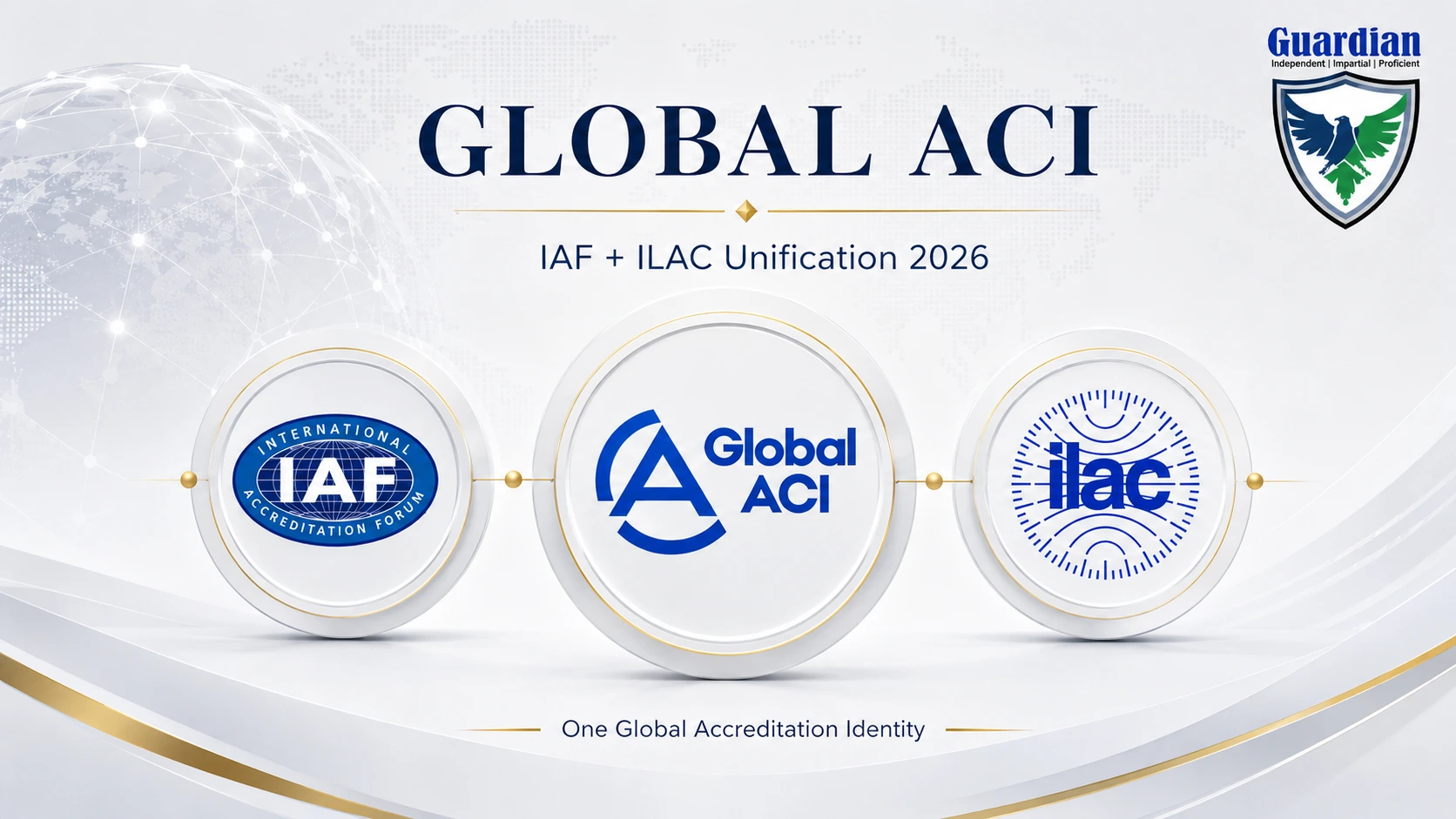
Why IAF and ILAC Merged in 2026?
To truly understand Global ACI, it helps to look at the journey that led here.
ILAC has long been the international authority for accrediting laboratories and inspection bodies, helping test results and inspection reports become trusted across borders. IAF has overseen accreditation bodies that accredit certification bodies issuing certifications for standards such as ISO 9001, ISO 14001, ISO 45001, ISO/IEC 27001 and many more.
While both organizations did important work in building global trust through mutual recognition arrangements, running two parallel systems with overlapping goals created duplicated work, extra cost and occasional confusion. The decision to merge did not happen overnight – it was driven by clear and practical reasons that anyone in the certification space will recognize immediately:
- Duplication of effort: IAF and ILAC each maintained governance structures, committees, technical documents and peer evaluation systems – often doing similar work twice.
- Inconsistency: Businesses working with both laboratory accreditation and management system certification had to deal with different frameworks, different rules and different oversight chains.
- Cost: The overhead of two parallel international organizations flowed through to accreditation bodies, certification agencies and, eventually, businesses seeking accredited services.
- The demands of modern trade: Global markets now need a cleaner, faster and more consistent accreditation framework, especially as sustainability, digital standards, AI, cyber security and cross-border compliance become more important.
In 2019, ILAC and IAF members voted to pursue the creation of a single unified organization. By October 2024, they formally endorsed the Global ACI constitution at their Joint General Assembly in Berlin. The purpose was to put accreditation in a stronger position to respond to global issues such as trade, sustainability and technical trust.
On January 1, 2026, Global ACI became fully operational and assumed the former roles of IAF and ILAC.
Key Dates to Remember
| Date | Event |
|---|---|
| 2019 | IAF & ILAC vote to pursue a single global accreditation organization |
| October 2024 | Global ACI constitution formally endorsed |
| December 6, 2024 | Global ACI registered as an Incorporated Society in New Zealand |
| January 1, 2026 | Global ACI became fully operational and assumed the former roles of IAF and ILAC |
| Mid-2026 | Ongoing transition of documents, systems and assets under the new Global ACI framework |
| 2026 onward | IAF MLA Mark and ILAC MRA Mark transition to Global ACI MRA Mark based on legal availability in each economy and formal notice from the Global ACI Secretariat, not one single global date |
How Global ACI Will Change ISO Accreditation?
Global ACI is set to change ISO accreditation in a big way. Here are the three most important changes you need to know about:
1. One MRA Instead of Two
The IAF Multilateral Recognition Arrangement (MLA) and the ILAC Mutual Recognition Arrangement (MRA) are now brought together under the Global ACI MRA. The Global ACI MRA is a five-level arrangement covering main scopes and sub-scopes across different conformity assessment activities.
In practical terms: a certificate, report or statement issued by a conformity assessment body accredited by a Global ACI MRA signatory is more likely to be accepted internationally within the relevant scope. This reduces repeated certification, testing or inspection. However, acceptance can still depend on local regulation, buyer requirements and whether the certificate is issued within the right accreditation scope.
2. New MRA Mark on Certificates
The familiar IAF and ILAC marks may gradually be replaced or used alongside the Global ACI MRA Mark where applicable. Use of the Global ACI MRA Mark is not mandatory, so accredited certificates, reports or statements may be seen with or without the MRA Mark.
The mark helps buyers quickly identify whether the certificate, report or statement comes from a conformity assessment body accredited by a Global ACI MRA signatory. The document should also clearly show which activity the accreditation relates to.
3. Broader Scope Under One Roof
Global ACI now covers the full spectrum of conformity assessment. This makes the framework more complete and easier to understand:
- Testing & Calibration Laboratories (ISO/IEC 17025)
- Medical Laboratories (ISO 15189)
- Inspection Bodies (ISO/IEC 17020)
- Management System Certification Bodies (ISO/IEC 17021-1, including ISO 9001, ISO 14001, ISO 45001, ISO/IEC 27001, ISO 22000, ISO 42001 and related schemes)
- Product Certification Bodies (ISO/IEC 17065)
- Personnel Certification Bodies (ISO/IEC 17024)
- Proficiency Testing Providers (ISO/IEC 17043)
- Reference Material Producers (ISO 17034)
- Validation & Verification Bodies (ISO/IEC 17029)
- Biobanking facilities (ISO 20387)
| Before Global ACI | After Global ACI |
|---|---|
| IAF and ILAC operated separately | A single Global ACI framework brings the former roles together |
| Separate MLA/MRA language often confused users | Global ACI MRA provides one clearer recognition framework |
| Different committees, documents and marks | Transition to Global ACI documents and Global ACI MRA Mark |
| Businesses often needed extra explanation for foreign buyers | Recognition is easier to explain, but scope and local requirements still matter |
What Will Change in IAF and ILAC After the Merger?
As of January 1, 2026, Global ACI became fully operational and assumed the former roles of IAF and ILAC. Their former functions – governance, technical work, policy development and mutual recognition – are being carried forward under the Global ACI framework.
Your existing ISO certificates generally remain valid if they were issued by a properly accredited certification body and remain within the correct scope, validity period and regulatory context. In simple words, most certificate holders should not need automatic re-certification only because of the IAF and ILAC merger.
However, do not write that every ISO certificate is automatically accepted everywhere. Official guidance is more careful: results from CABs accredited by Global ACI MRA signatories are accepted by MRA signatories, but there is still no absolute guarantee that every buyer, regulator or foreign market will accept them without any extra requirement.
The old IAF MLA Mark and ILAC MRA Mark do not stop immediately. Their continued use is governed by transitional arrangements. Once the Global ACI MRA Mark is legally available in an economy and the Secretariat has issued notice, new accreditations, renewals, re-issues and amended documents should move to the Global ACI MRA Mark where applicable.
What is the Impact of this Merger on Certification Body, Auditors and ISO Certification Holders?
For certification bodies and auditors, Global ACI brings both opportunity and a period of adjustment. Here’s what it means at a practical level:
For Certification Bodies (CBs): CBs like Lucknow-based Guardian Assessment Private Limited will need to align with the new Global ACI MRA framework. This means reviewing procedures, updating certificate templates where required, training staff and following accreditation body instructions for the Global ACI MRA Mark transition. The major upside is clear: certificates issued through properly accredited channels can carry stronger international confidence, helping clients explain their compliance in export and procurement discussions.
For Auditors: Auditors will need to get up to speed with Global ACI’s unified approach, updated documents and any instructions issued by their certification body or accreditation body. While this involves some learning, the outcome should be more consistency and predictability in audits across regions and industries.
For ISO Certification Holders: If your ISO certificate is valid, do not panic. First check the certification body name, accreditation body mark, expiry date, scope and applicable standard. If you export products or services, also check whether your buyer or regulator asks for a particular accreditation body or additional national requirement.
For Everyone: The efficiencies that come with one unified body mean less duplicated work across the system. Surveillance audits and recertifications may become easier to manage as documents and recognition rules become clearer. But businesses should still keep certificate records, supplier contracts and buyer requirements updated.
What is the Future of ISO Certification with Global ACI?
With Global ACI now at the helm, the future of ISO certification looks more connected and more structured. The unified accreditation system gives standards like ISO 9001, ISO 14001 and ISO 45001 a clearer role in global trade.
As demand grows for sustainability, ESG-aligned certifications, cyber security, privacy, digital trust and AI-related standards, Global ACI makes it easier for businesses to demonstrate compliance in new and emerging markets. A harmonized global framework also means organizations are better prepared to address major challenges – from climate targets and supply chain resilience to digital transformation and cross-border regulatory compliance.
This is especially important for standards such as ISO/IEC 27001 for information security, ISO 22301 for business continuity, ISO 37001 for anti-bribery management, ISO 42001 for AI management systems and future sustainability-related conformity assessment schemes.
How Will Global ACI Impact Vary by Region?
In India: As a major hub for manufacturing, IT, services and certification activity, India is well-placed to benefit from this change. The unified MRA can make Indian ISO certifications easier to explain in international business conversations, especially where the certification body and accreditation body are properly recognized for the relevant scope.
For Indian exporters, the practical advice is simple: keep your ISO certificate, accreditation details, audit records and supplier documents ready. When a buyer asks whether your certificate is internationally recognized, verify the accreditation body and MRA scope instead of giving only a general answer. Global ACI also provides a Recognised ABs page where economies and scopes can be checked.
In Europe: The picture can be more nuanced because EU law, national regulations and sector-specific requirements may affect how accredited certificates, test reports or inspection results are used. Global ACI recognition supports international acceptance, but it does not override national laws or competent authority decisions. Businesses selling into Europe should check buyer requirements and any sector-specific regulatory rules.
In Other Export Markets: For the United States, Middle East, Africa and Asia-Pacific markets, acceptance often depends on the buyer, regulator, product category and standard involved. Global ACI improves trust, but businesses should still confirm specific market requirements before shipment, tender submission or contract signing.
How You Need to Prepare for the Global ACI Transition?
The good news is that preparing for Global ACI does not need to be overwhelming. Here are the key steps I’d recommend:
For Businesses: Take a look at your ISO certificates, supplier contracts, tender documents and customer approval forms. Identify any references to IAF, ILAC, IAF MLA Mark or ILAC MRA Mark that may need to be updated as the Global ACI MRA Mark becomes legally available in the relevant economy. Reach out to your certification body – like Guardian Assessment – for guidance on staying compliant throughout the transition.
For Certification Bodies: Begin aligning your documentation, audit processes, certificate templates, website content and staff training with the Global ACI MRA framework. The sooner you start, the smoother the transition will be for your clients.
For Auditors: Look for training on Global ACI’s updated documents, MRA structure, mark-use rules and audit-related instructions through your certification body or accreditation organization. Staying current will give you a real edge in consistency and credibility.
Suggestion: Follow industry forums and subscribe to updates directly from Global ACI at global-aci.org to get the latest announcements, policy changes and guidance as the transition unfolds. Being informed early is always better than scrambling to catch up.
Guardian Assessment Welcomes the Global ACI Era - With Open Arms
As a Certification Body (CB), this is a moment we at Guardian Assessment have been looking forward to with genuine enthusiasm. Congratulations to Global ACI, and to the entire IAF and ILAC community for making this historic transition happen. It takes years of collaboration, political will and trust among hundreds of accreditation bodies, regional groups and stakeholders across the world to pull something like this off – and it has been done with remarkable professionalism. For us as a CB, this merger is not a challenge to navigate. It is a victory for the entire quality ecosystem – and for every business that has invested in ISO certification.
We have been monitoring the GLOBAC/Global ACI transition since it was announced and have aligned our processes accordingly. Our certifications – spanning ISO 9001, ISO 14001, ISO 45001, ISO 21001, ISO 27001 and ISO 37001 – are issued through accredited channels and will continue to support international confidence under the Global ACI framework. Whether you are a first-time applicant or renewing an existing certification, you can be confident that Guardian follows the accreditation route, mark-use rules and transition guidance relevant to your certificate.
At the same time, we always recommend that clients verify the certification body, accreditation body, certificate scope and specific market requirements when a buyer or regulator asks for confirmation. This careful approach protects your business and strengthens the credibility of your ISO certification.
What We Think: About IAF and ILAC Merged
The arrival of Global ACI is far more than an administrative change – it is a fundamental step forward for the global quality and accreditation ecosystem. By bringing the former roles of IAF and ILAC under one framework, with one Global ACI MRA and one clearer governance direction, it makes ISO certification more understandable, more credible and more useful for international business.
Whether you’re a business pursuing ISO 9001 certification, an auditor ensuring compliance, or a certification body like Guardian Assessment navigating the new landscape, this evolution is genuinely good news. My advice? Stay informed, review your documentation, verify your accreditation details and embrace the opportunity to be part of a stronger, more connected ISO world.
Frequently Asked Questions : About Global ACI
Ans) Global ACI (Global Accreditation Cooperation Incorporated) is the new global accreditation cooperation that became fully operational on January 1, 2026 after assuming the former roles of ILAC and IAF. It matters because it supports a clearer international recognition framework for accredited certificates, reports and conformity assessment results.
Ans) Global ACI stands for Global Accreditation Cooperation Incorporated.
Ans) If you already hold an ISO certificate, you may not notice much change immediately. The transition is designed to provide continuity. Changes may appear in document references, certificate templates, accreditation marks, website wording and verification processes as the Global ACI framework becomes fully embedded.
Ans) Usually, no. Your existing certificate should not need automatic reissue only because of the IAF and ILAC merger, provided it is valid, issued by a properly accredited certification body and within the correct accreditation scope. Always check with your certification body if a customer or regulator asks for confirmation.
Ans) No. Global ACI MRA recognition improves international acceptance, but it does not guarantee that every buyer, regulator or market will accept every certificate without extra checks. Local laws, product rules, buyer requirements and scope of accreditation may still apply.
Ans) In the long run, the efficiency gains from reducing duplication between the former IAF and ILAC systems may help reduce administrative cost and complexity. Those benefits can support accreditation bodies, certification bodies and businesses, but actual pricing will depend on each organization and market.
Ans) Auditors should familiarize themselves with Global ACI's framework, MRA structure, updated documents and mark-use rules. Formal training requirements may depend on the certification body, accreditation body and scheme involved.
Ans) The Global ACI MRA is the Multilateral Recognition Arrangement between peer-evaluated accreditation bodies. It supports mutual recognition of accredited conformity assessment activities such as certification, testing, inspection, validation and verification.
Ans) First check the certification body shown on the certificate. Then check the accreditation body mark and confirm whether that accreditation body is a Global ACI MRA signatory for the relevant scope. You can also ask the certification body or accreditation body for written confirmation.
Ans) An accreditation body checks whether a certification body, laboratory or inspection body is competent and impartial. A certification body audits an organization and issues certificates such as ISO 9001, ISO 14001, ISO 45001 or ISO/IEC 27001.
Ans) No. Global ACI itself does not issue ISO certificates and does not directly provide testing, inspection, certification, validation or verification services. These activities are done by conformity assessment bodies accredited by recognized accreditation bodies.
Ans) The Global ACI MRA Mark helps show that an accreditation body is a signatory to the Global ACI MRA. Accredited conformity assessment bodies may also use the mark in combination with the accreditation symbol where allowed. Use of the MRA Mark is not mandatory.
Ans) No. The IAF MLA Mark and ILAC MRA Mark do not stop immediately. Their continued use is controlled by transition rules, legal availability of the Global ACI MRA Mark in each economy and formal notice from the Global ACI Secretariat.
Ans) This change affects the accreditation framework behind many standards and conformity assessment activities, including ISO 9001, ISO 14001, ISO 45001, ISO/IEC 27001, ISO 22000, ISO 37001, ISO 42001, ISO/IEC 17021-1, ISO/IEC 17025, ISO/IEC 17020, ISO/IEC 17065, ISO/IEC 17024, ISO/IEC 17029, ISO/IEC 17043, ISO 17034 and ISO 20387.
Ans) Guardian Assessment has been closely monitoring and aligning with the Global ACI transition. Our certifications across ISO 9001, ISO 14001, ISO 45001, ISO 21001, ISO 27001 and ISO 37001 continue to be supported through accredited channels under the new framework. You're in safe hands, and we recommend verification whenever a buyer or regulator requests it.
Official Sources Used
Sources checked on 26 June 2026.
- Global ACI FAQ: https://global-aci.org/en/faq/
- About the Global ACI MRA: https://global-aci.org/en/about-the-global-aci-mra/
- Global ACI MRA Mark: https://global-aci.org/en/mra-mark/
- Global ACI Recognised ABs: https://global-aci.org/en/recognised-abs/
Contact
Guardian Assessment Private Limited | Keshav Nagar, Sitapur Road, Lucknow | +91-9219975790 | guardianassessment@gmail.com | www.guardiancertification.com