
Indonesia is rapidly transforming. Driven by the ambitious “Making Indonesia 4.0” roadmap, the massive infrastructure development of the new capital, Nusantara (IKN), and a booming digital economy in Jakarta, Indonesian businesses are scaling at an unprecedented rate.
To participate in this growth—whether you are a manufacturing firm in Surabaya, a tech startup in Bandung, or an infrastructure contractor bidding for government projects—you must prove your operational excellence. Multinational partners, foreign investors, and government procurement bodies require verifiable assurance that your business meets the highest global standards for quality, safety, and security.
At Guardian Assessment Private Limited, we provide independent, impartial, and internationally recognized ISO certification services to businesses across Indonesia. As an accredited Certification Body (CB) holding prestigious accreditations from the International Accreditation Service (IAS) and the United Accreditation Foundation (UAF), we deliver the rigorous audits your business needs to win high-value contracts and build global trust.
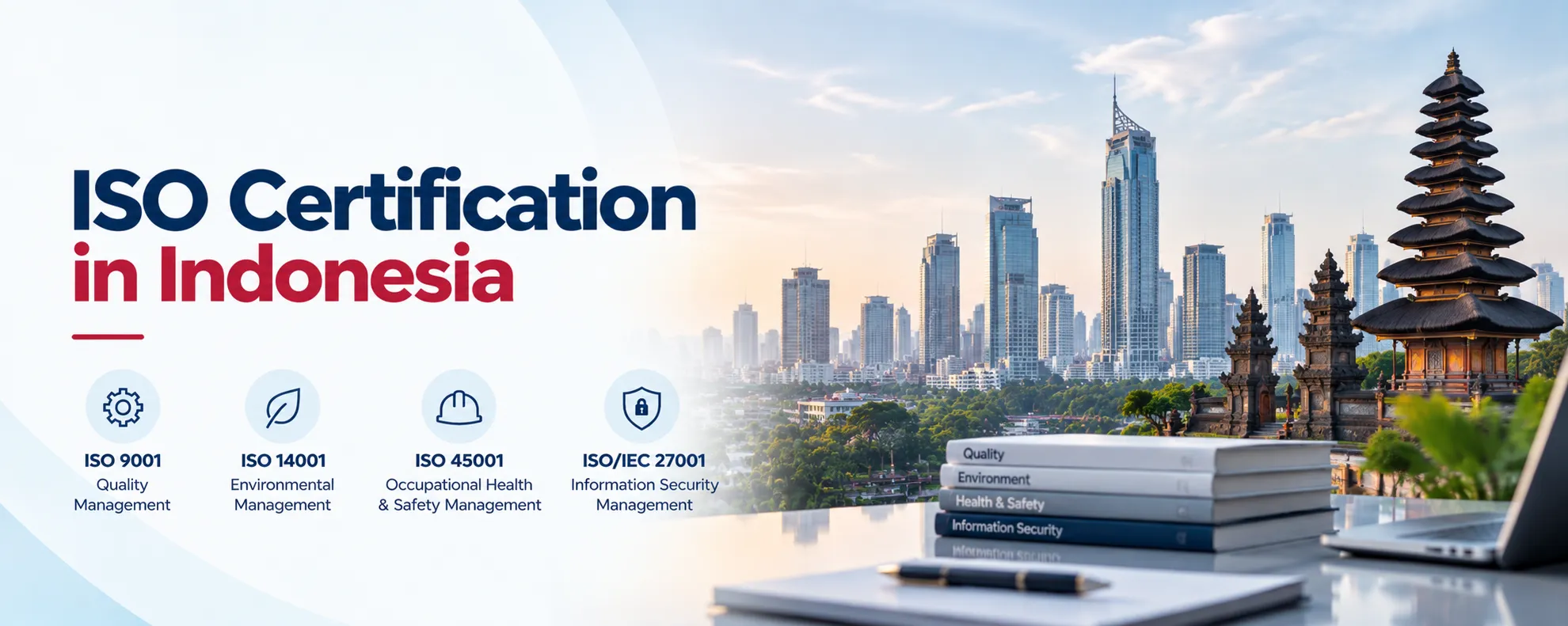
ISO Certification Standards Available in Indonesia
Different ISO management system standards address different organizational activities, operational risks, and business requirements. The right standard depends on your industry, business objectives, customer expectations, and applicable contractual or regulatory obligations.
Guardian Assessment Private Limited provides certification services for the following standards, subject to the applicable accreditation scope, standard edition, and certification arrangements.
- ISO 9001 – Quality Management System: Helps organizations improve process consistency, product and service quality, and customer satisfaction. The latest international edition, ISO 9001:2026, was published in September 2026 with greater emphasis on leadership, quality culture, and risk and opportunity management. Under separate international transition arrangements, new and initial accredited certifications must use the 2026 edition from 31 March 2028, while existing ISO 9001:2015 certificates must transition by 30 September 2029. These deadlines concern international certification transition arrangements and do not automatically establish national adoption or accreditation approval for the revised edition in Indonesia.
- ISO 14001 – Environmental Management System: Provides a framework for identifying environmental aspects, managing waste, improving resource efficiency, and controlling environmental risks. The updated ISO 14001:2026, published in April 2026, strengthens environmental management requirements and provides clearer guidance on environmental performance. Particularly relevant to mining, manufacturing, palm oil processing, construction, and energy-related activities.
- ISO 45001 – Occupational Health and Safety Management System: Helps organizations identify workplace hazards, reduce occupational health and safety risks, and improve worker protection. Particularly relevant to manufacturing, mining, construction, and industrial operations. Indonesia also has workplace safety management requirements under Government Regulation No. 50 of 2012, which establishes the Sistem Manajemen Keselamatan dan Kesehatan Kerja (SMK3) framework. ISO 45001 certification does not automatically replace applicable SMK3 obligations.
- ISO/IEC 27001 – Information Security Management System: Supports organizations in identifying information security risks, protecting sensitive data, and maintaining appropriate security controls. Relevant to technology companies, financial services, digital platforms, outsourcing providers, and businesses handling confidential information.
- ISO 37001 – Anti-Bribery Management System: The latest international edition, ISO 37001:2025, provides a structured framework for preventing, detecting, and addressing bribery risks through policies, due diligence, and internal controls. Relevant to organizations involved in procurement, contracting, infrastructure projects, and complex supplier relationships.
- ISO 21001 – Management Systems for Educational Organizations: Helps schools, universities, training institutions, and other education providers improve educational processes, management effectiveness, and learner satisfaction. The latest international edition is ISO 21001:2025.
The applicable standard edition and accredited certification scope should be confirmed with the certification body before an assessment is arranged.
Why ISO Certification Is Important for Businesses in Indonesia
Businesses working with international manufacturers, export buyers, government contractors, and large supply chains are often expected to demonstrate reliable processes, consistent performance, and effective management controls. ISO certification provides an independent assessment of a management system against recognized requirements. When properly implemented, these systems can support businesses in several ways.
- Improved Operational Consistency: Defined responsibilities, documented processes, and regular performance monitoring help businesses reduce errors, maintain product and service quality, and improve day-to-day operations.
- Greater Customer Confidence: Accredited certification provides independent evidence that an organization’s management system has been assessed against the applicable ISO standard.
- Supplier and Contract Requirements: Manufacturers, exporters, contractors, and service providers may need to demonstrate recognized management system practices when working with multinational companies, international buyers, and major supply chains.
- Effective Risk Management: ISO management systems help organizations identify operational, environmental, occupational safety, and information security risks, establish suitable controls, and monitor their effectiveness.
- Continual Improvement: Internal audits, management reviews, corrective actions, and performance evaluations allow organizations to identify recurring problems and improve the effectiveness of their management systems.
Indonesia’s National Standardization Framework
Indonesia’s national standardization framework is established under Law No. 20 of 2014 on Standardization and Conformity Assessment. The framework supports the development and application of Indonesian National Standards (Standar Nasional Indonesia, or SNI) to strengthen product quality, safety, conformity assessment, and business competitiveness. For organizations involved in manufacturing, processing, exports, and industrial services, ISO management systems can complement these national quality objectives by strengthening internal controls and improving operational performance.
However, ISO management system certification and mandatory SNI product certification serve different purposes, and businesses must identify any product-specific requirements that apply to their activities.
Which Industries in Indonesia Benefit from ISO Certification?
Indonesia’s economy includes large manufacturing centres, resource-based industries, agricultural processing, infrastructure development, and expanding digital and service sectors. The value of individual ISO standards depends on the organization’s activities, operational risks, and customer or contractual requirements.
- Automotive and Manufacturing – West Java, Central Java, and East Java: Automotive component manufacturers, electronics producers, machinery suppliers, and industrial facilities can use ISO 9001 to improve production controls, inspection processes, supplier evaluation, and product consistency. ISO 14001 and ISO 45001 can support environmental and workplace safety management.
- Mining and Mineral Processing – Kalimantan and Sulawesi: Mining operators, nickel processing facilities, equipment suppliers, and engineering contractors can use ISO 9001 for process quality, ISO 14001 for managing environmental aspects, and ISO 45001 for occupational health and safety management.
- Palm Oil and Agro-Processing – Sumatra and Kalimantan: Palm oil processors, agricultural exporters, and food-related businesses can use ISO 9001 to strengthen traceability, production processes, supplier controls, and customer requirements. ISO 14001 can support environmental management. Separate product safety, sustainability, and other sector-specific requirements may also apply.
- Logistics and International Trade – Jakarta, Surabaya, and Batam: Freight operators, warehousing businesses, port-related service providers, and trading companies can apply ISO 9001 to improve service reliability, documentation, and operational coordination. ISO/IEC 27001 can support information security where sensitive commercial data is handled.
- Construction and Infrastructure – Java and Kalimantan: Construction companies, engineering contractors, and infrastructure service providers can use ISO 9001 for project quality management, ISO 45001 for workplace safety, and ISO 14001 for controlling relevant environmental aspects.
- Information Technology and Digital Services – Jakarta and Bandung: Software developers, IT outsourcing businesses, digital service providers, and technology companies can use ISO 9001 for consistent service delivery and ISO/IEC 27001 for managing information security risks.
- Tourism and Hospitality – Bali and Yogyakarta: Hotels, tourism operators, hospitality businesses, and service providers can apply ISO 9001 to improve customer service, operational consistency, complaint handling, and service quality. ISO 14001 can support environmental management activities.
- Education and Training Institutions – Universities, schools, vocational training centres, and educational service providers can use ISO 21001 to improve educational management processes, learner satisfaction, and the effectiveness of learning services.
Certification requirements vary according to the organization’s operations, selected ISO standard, and intended certification scope.
What Do Businesses Need to Get ISO Certified?
Before applying for accredited ISO certification, an organization must establish and implement a management system that meets the requirements of its chosen standard. The specific requirements vary by standard, but most management system certifications involve the following preparations:
- Define the Management System Scope: Identify the organization’s business activities, products, services, operational processes, and locations that will be covered by the certification.
- Establish Policies and Objectives: Develop relevant management policies, measurable objectives, and assigned responsibilities that align with the selected ISO standard and organizational activities.
- Maintain Documented Information: Prepare and control the policies, procedures, operational records, and other documented information necessary to demonstrate effective management system implementation.
- Address Applicable Requirements: Identify relevant Indonesian laws, regulations, customer expectations, and contractual obligations. For example, occupational health and safety management systems must consider applicable workplace safety requirements, while manufacturers should determine whether mandatory SNI product standards apply.
- Assign Responsibilities and Ensure Competence: Define roles and responsibilities and ensure employees have the necessary skills, training, and awareness to carry out their activities effectively.
- Conduct Internal Audits and Management Reviews: Evaluate the management system’s conformity and effectiveness, review performance with leadership, and identify necessary improvements before the external certification assessment.
- Address Nonconformities: Implement appropriate corrections and corrective actions, and maintain evidence that identified problems have been addressed.
These preparations help demonstrate that the management system operates effectively in practice rather than existing only as documentation. ISO certification does not replace applicable business licences, statutory approvals, or regulatory inspections.
ISO Certification and Government Tenders in Indonesia
Government procurement is governed by Presidential Regulation No. 16 of 2018, as amended by Regulation No. 46 of 2025. The National Public Procurement Agency (Lembaga Kebijakan Pengadaan Barang/Jasa Pemerintah, or LKPP) also introduced Regulation No. 3 of 2026, updating the guidelines for preparing and conducting government procurement through suppliers. ISO certification is not mandatory for every government tender. However, individual procurement procedures may specify relevant ISO management system certifications, technical qualifications, or other conformity requirements under the applicable rules.
Businesses should review the tender documents to confirm supplier eligibility, certification, accreditation, licensing, and product-related requirements before participating. Holding an ISO certificate does not automatically guarantee tender eligibility or contract approval.
SNI Requirements and ISO Certification
Under Indonesia’s Law No. 20 of 2014, Indonesian National Standards (SNI) may be applied voluntarily or made mandatory through applicable regulations. ISO management system certification and mandatory SNI product certification serve different purposes. For example, ISO 9001 evaluates an organization’s quality management system, while certain products must meet mandatory SNI requirements before they can be marketed or supplied.
Manufacturers, importers, and suppliers should therefore identify any applicable product standards, certification schemes, and regulatory approvals separately from their ISO management system certification requirements.
Cost and Process of ISO Certification
Implementing structured management systems can help organizations improve operational performance, manage risks, maintain consistent quality, and meet customer expectations. Understanding certification costs and the audit process is an important first step before starting certification. The cost of ISO certification varies depending on factors such as the number of employees, operational locations, business activities, certification scope, selected ISO standard, and applicable audit requirements. For a detailed explanation of the factors affecting certification fees, read our guide on How Much Does ISO Certification Cost?.
Want to understand the steps involved in certification? Read our detailed ISO Certification Process guide to understand application review, Stage 1 and Stage 2 audits, handling nonconformities, and the certification decision.
Why Choose Guardian Assessment for ISO Certification in Indonesia?
Choosing an accredited certification body like Guardian Assessment Private Limited helps businesses obtain credible and independently assessed ISO certification. Organizations seeking ISO certification in Indonesia can evaluate a certification body’s accreditation scope, industry expertise, and audit capabilities before proceeding.
- Industry Expertise: Our auditors have technical knowledge of management systems and business processes across industries such as manufacturing, mining, construction, logistics, agriculture, information technology, and professional services.
- Impartial & Objective Audits: As an accredited certification body, Guardian Assessment Private Limited conducts independent, impartial, and evidence-based audits against applicable ISO management system standards.
- Global Recognition: Guardian Assessment holds accreditation from the United Accreditation Foundation (UAF) and International Accreditation Service (IAS) for specified management system certification activities. These accreditations may cover different standards, editions, and technical scopes. International recognition and certificate acceptance depend on the relevant accreditation schedule and customer or regulatory requirements.
- IAF CertSearch: The validity of eligible accredited ISO management system certificates can be checked through the IAF CertSearch database.
Request an ISO Certification Quote
Frequently Asked Questions
Certification costs depend on the chosen ISO standard, organization size, operational complexity, number of locations, and applicable audit requirements. A certification body can provide a quotation after reviewing the organization's activities and certification scope.
The timeline depends on management system readiness, audit scheduling, organizational complexity, and the time required to address any nonconformities. Businesses with established systems may be ready for external assessment sooner than those starting implementation.
Internationally accredited ISO certificates may be accepted by Indonesian customers and contracting authorities, subject to the applicable accreditation scope and contractual or regulatory requirements. Foreign accreditation does not automatically establish KAN accreditation or guarantee acceptance for every purpose.
Check the issuing certification body, accreditation status, applicable ISO standard, certification scope, and validity dates. Eligible accredited certificates may be verified through IAF CertSearch, the issuing body's official records, or the relevant accreditation body's directory.