You have decided to get ISO certified and contacted a few certification bodies. One gives you a very low quotation. Another promises quick certification. A third talks about international recognition, but you’re not sure what that means for your business.
So, how do you choose the right one?
Choosing an ISO certification body isn’t just about comparing prices. You may need the certificate for a customer, government tender, export order, or supplier approval. If the certificate doesn’t meet the required conditions or the certification process isn’t handled properly, it can create problems later. In this guide, we’ll explain how to choose an ISO certification body in India through seven practical checks. You’ll learn what to look for, which questions to ask, and how to compare providers before making a decision.
How Do You Choose the Right ISO Certification Body?
Start by checking whether the ISO certification body has the right accreditation and whether its certificate will meet your business requirements. Next, look at its industry experience, reputation, audit process, and certification fees. Also, check how certificates can be verified and what support you’ll receive after certification. The right choice is a provider that can explain its services clearly and support its claims with evidence.
Why Do Businesses Need an ISO Certification Body?
Let’s understand this with a simple situation. Suppose your company wants ISO 9001 certification because an important customer has asked for it. You may already follow good quality practices, but your customer wants confirmation from an outside organisation that your business meets ISO 9001 requirements.
This is where an ISO certification body comes in.
A certification body checks how your business works. Its auditors review your processes, speak with employees, and examine records to see whether you’re following the required ISO standard. If your organisation meets the requirements, the certification body can approve and issue the certificate. But many businesses don’t realise this: ISO itself doesn’t issue ISO certificates. ISO develops the standards, while certification bodies carry out the audits and issue certificates. You may also hear about an accreditation body. Its job is different. It checks whether a certification body is qualified and competent to carry out particular types of certification.
In India, the National Accreditation Board for Certification Bodies (NABCB) is one such accreditation body. Some certification bodies operating in India are also accredited by organisations based in other countries. So, when choosing a certification body, you need to check two things: whether it is qualified to provide the certification you need and whether its certificate will meet your business requirements.
Now, let’s understand how to check that.
1. Check Whether the Certification Body Is Properly Accredited
When a certification body says, “We are accredited,” that’s a good starting point. But don’t make your decision based only on that statement. Ask one more question: “Is your accreditation valid for the ISO standard and type of business we need?”
Here’s why this matters.
A certification body may be accredited to issue ISO 9001 certificates but not ISO/IEC 27001 certificates. Its accreditation may also cover certain types of business activities but not others. So, even if you see an accreditation logo on the company’s website, you should check what that accreditation actually covers.
What Should You Ask and Where Can You Check?
Ask the certification body to share its registered company name, accreditation number, and the name of its accreditation body. Also, request its accreditation scope. This is simply a document showing which ISO standards and activities the certification body is accredited to certify.
You can verify these details through the accreditation body’s official website. If the certification body is accredited by NABCB, check the NABCB Management System Certification directory. If it holds overseas accreditation, use that accreditation body’s official directory.
A quick note about international recognition: Since January 2026, Global ACI has managed the international recognition arrangements previously handled by IAF and ILAC. Older IAF MLA or ILAC MRA marks may still appear under specific transition rules. Rather than relying on these marks alone, check the accreditation’s current status, scope, and recognition through official records. You can refer to Global ACI’s official guidance.
Table 1: Accreditation Checks Before Choosing an ISO Certification Body
What to check | Where to check | What you should confirm |
Registered company name | Official accreditation directory | The company listed is the one that will issue your certificate. |
Accreditation status | Accreditation body’s website | The relevant accreditation is currently valid. |
ISO standard covered | Accreditation scope | The certification body is accredited for your required standard. |
Industry activities | Published scope or accreditation-body confirmation | Your business activities fall within the relevant scope. |
International recognition, if required | Accreditation-body records and Global ACI | The recognition meets your customer’s requirements. |
Practical tip: Ask for a direct link to the official accreditation record instead of relying only on a brochure or accreditation logo. Once you’ve confirmed the certification body’s accreditation, the next thing to check is whether the certificate will actually serve your purpose.
2. Check Whether the Certificate Will Meet Your Business Needs
Not every ISO certificate will meet every customer’s requirements. For example, imagine an auto-component manufacturer in Pune applying to become a supplier to a large automotive company. The buyer asks for ISO 9001 certification covering manufacturing activities. If the supplier receives a certificate covering only office administration, that certificate may not meet the buyer’s requirement, even if it is genuine. That’s why it’s important to understand what your customer or tender requires before applying for certification.
Read the Customer or Tender Requirements First
Before requesting a quotation, check these points:
- Which ISO standard is required? Your customer may ask for ISO 9001, ISO 14001, ISO 45001, or more than one standard. Make sure you’re applying for the correct one.
- Which business activities should be covered? Your certificate should cover the products, services, or activities relevant to your customer’s requirements.
- Which locations need certification? If your company has multiple factories, warehouses, or offices, confirm which locations must be included.
- Are there specific accreditation requirements? Some customers or tenders may require certificates issued under particular recognised accreditation arrangements.
- When do you need the certificate? Check whether certification must be completed before submitting a tender or whether the customer allows more time.
If you’re unsure about any condition, ask your customer or the tendering authority for clarification before proceeding. Also, remember that ISO management system certification doesn’t replace separate BIS approvals, product licences, or legal permissions where these are required. Once you’re clear about the certification your business needs, the next step is to find out whether the certification body understands your industry.
3. Find Out Whether the Certification Body Understands Your Industry
Think about a manufacturing factory, a hospital, a construction company, and an IT business. All four may apply for ISO 9001 certification, but their daily activities, responsibilities, and business risks are very different. That’s why industry experience matters. You want auditors who understand how your type of business operates. They should be able to ask relevant questions, review the right records, and understand the activities they are assessing.
Ask About Industry Experience and Auditor Competence
Before selecting a certification body, consider asking:
- Have you audited businesses similar to ours? Experience in your industry can help the audit team understand your operations and the evidence relevant to them.
- How do you select auditors for our business? Ask how the certification body ensures that its auditors have the right knowledge for your activities.
- Can your auditors cover our locations and working shifts? This is important if your business operates at different locations or runs multiple shifts.
- How will you explain audit findings? A professional auditor should clearly explain what was observed and which ISO requirement needs attention.
For example, an auditor assessing a manufacturing company may examine how materials are received, production is controlled, and finished products are inspected. In an IT company, the same ISO 9001 standard may involve examining customer requirements, service delivery, changes, and complaint handling.
The standard may be the same, but the work being assessed is different.
Check Its Reputation, Not Just Its Marketing
Industry experience is important, but you should also consider the certification body’s reputation. Look at its business history, publicly available information, genuine customer reviews where available, and how professionally it responds to enquiries. You can also ask for references from businesses in similar industries, where the certification body can share them with permission. A well-known name or positive online review can be reassuring, but neither automatically proves that a certification body will conduct a competent audit.
Look for genuine evidence of experience, professionalism, and reliable service. Once you’re comfortable with the certification body’s industry knowledge, the next question is how it will conduct your audit.
4. Understand What Actually Happens During the Audit
Before signing an agreement, you should have a clear idea of what will happen during certification. You don’t need to understand every technical requirement, but the certification body should be able to explain its process in simple terms.
What Does the Initial Certification Process Look Like?
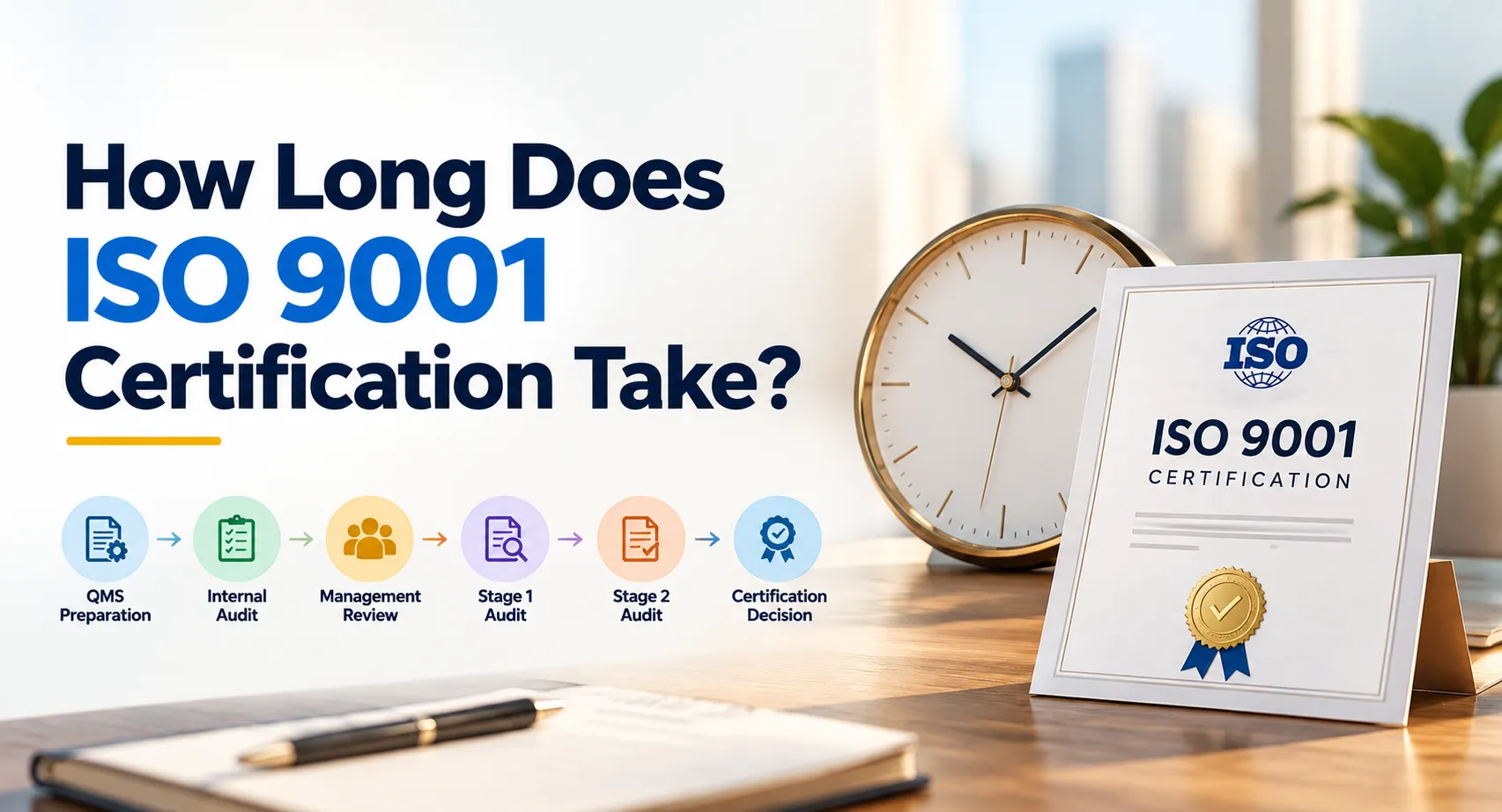
For most ISO management system certifications, the process involves the following steps:
- Application review: You share basic information about your company, including its activities, employees, locations, and the ISO standard you need. The certification body reviews this information to plan the audit.
- Stage 1 audit: The auditors review your management system and check whether your company is ready for the main audit.
- Stage 2 audit: The auditors check how your processes work in practice. They may speak with employees, review records, and observe day-to-day activities.
- Corrective actions, if required: If the auditors identify any problems, your company must address them and provide the necessary evidence.
- Certification decision: The audit results are reviewed by authorised people who were not part of the audit team. Certification is granted when the applicable requirements have been met.
(Need a deeper dive into the exact steps of the audit? Review our detailed ISO Certification Process breakdown).
The Audit Plan Should Fit Your Business
Every business operates differently, so the audit plan should reflect the organisation being assessed.
For example, a small office with 15 employees will not usually need the same audit arrangements as a manufacturing company with several production lines and multiple working shifts. The certification body should consider your company’s activities, size, employees, locations, shifts, and complexity when planning the audit.
This is what a tailored audit approach should mean.
However, it doesn’t mean changing ISO requirements or offering an easier assessment. The same applicable requirements must still be met. Ask the certification body how many audit days it has planned, which locations will be covered, and how the schedule has been decided. Also, be careful with offers such as “Guaranteed ISO Certificate” or “No Audit Required.” A genuine certification decision depends on the audit findings. No certification body should promise approval before reviewing the necessary evidence. Once you understand the audit process and what’s included, comparing certification quotations becomes much easier.
5. Compare the Full Cost, Not Just the First Quotation
It’s natural to compare prices when choosing an ISO certification body. But a lower quotation doesn’t always mean you’re getting the same service for less money. One certification body may include auditor travel and all required locations in its quotation. Another may charge separately for these items. That’s why you should compare the total expected certification cost, not just the initial amount.
Why Do Certification Fees Differ?
Certification fees depend on several factors, including your company’s size, activities, number of employees, working shifts, locations, and the time needed to complete the audit. A small office may need fewer audit days than a large manufacturing facility operating around the clock.
Before accepting a quotation, ask: “How many audit days are included, which locations will be covered, and what could cost extra?” A professional certification body should be able to explain the quotation clearly.
What Should the Certification Quotation Include?
Table 2: ISO Certification Quotation Comparison Checklist
Cost item | What to ask | Why it matters |
Initial certification | Are Stage 1, Stage 2, and related charges included? | Helps you understand the initial certification cost. |
Audit days and locations | How many audit days and sites are included? | Makes it easier to compare quotations fairly. |
Auditor travel | Are travel and accommodation charges included? | Helps avoid unexpected expenses. |
What will the follow-up audits cost? | Helps you plan future expenses. | |
How will recertification fees be calculated? | Helps with long-term budgeting. | |
GST and additional charges | Are taxes, cancellations, and additional audit charges explained? | Makes payment terms clearer. |
Ask the certification body to provide an estimate of the charges across the normal three-year certification cycle, with any variable costs identified. A lower quotation isn’t necessarily a problem. Just make sure it covers the work your business actually needs. Now that you’ve compared the cost, there’s another important question: how will your customers know whether your certificate is genuine?
6. Ask How Someone Can Verify Your ISO Certificate
Imagine you’ve received your ISO certificate and shared it with a new customer.
The customer replies, “Can you provide a link where we can verify this certificate?” You should be able to answer that question easily. A reliable certification body should explain how customers, procurement teams, or other interested parties can verify certificates it has issued.
What Should Appear on the Certificate?
An ISO management system certificate normally includes:
- Company details: The name of the certified organisation and the relevant locations.
- ISO standard: The standard against which the business has been certified.
- Certification scope: A description of the business activities covered.
- Certification body details: The organisation responsible for issuing the certificate.
- Certificate number and dates: Information that helps identify the certificate and check its validity.
These details allow someone to confirm that the certificate belongs to the correct business and is currently valid.
Where Can a Customer Verify It?
One option is IAF CertSearch, where relevant certification records are available. Some certification bodies also have their own online certificate-verification services or provide confirmation directly. Ask the certification body which verification method your customers should use. Important: If a certificate doesn’t appear in IAF CertSearch, it doesn’t automatically mean the certificate is fake. Some records may not be available in the database.
In that situation, contact the issuing certification body and, if necessary, the accreditation body to confirm the certificate’s status. You can read the IAF CertSearch verification guidance for more information. Certificate verification is important, but your relationship with the certification body doesn’t end when the certificate is issued.
7. Know What Happens After Your Certificate Is Issued
Receiving your ISO certificate is an important milestone, but your business still needs to maintain the management system that was certified. The certification body will also conduct follow-up audits to check that your organisation continues meeting the relevant requirements.
What Does the Three-Year Certification Cycle Look Like?
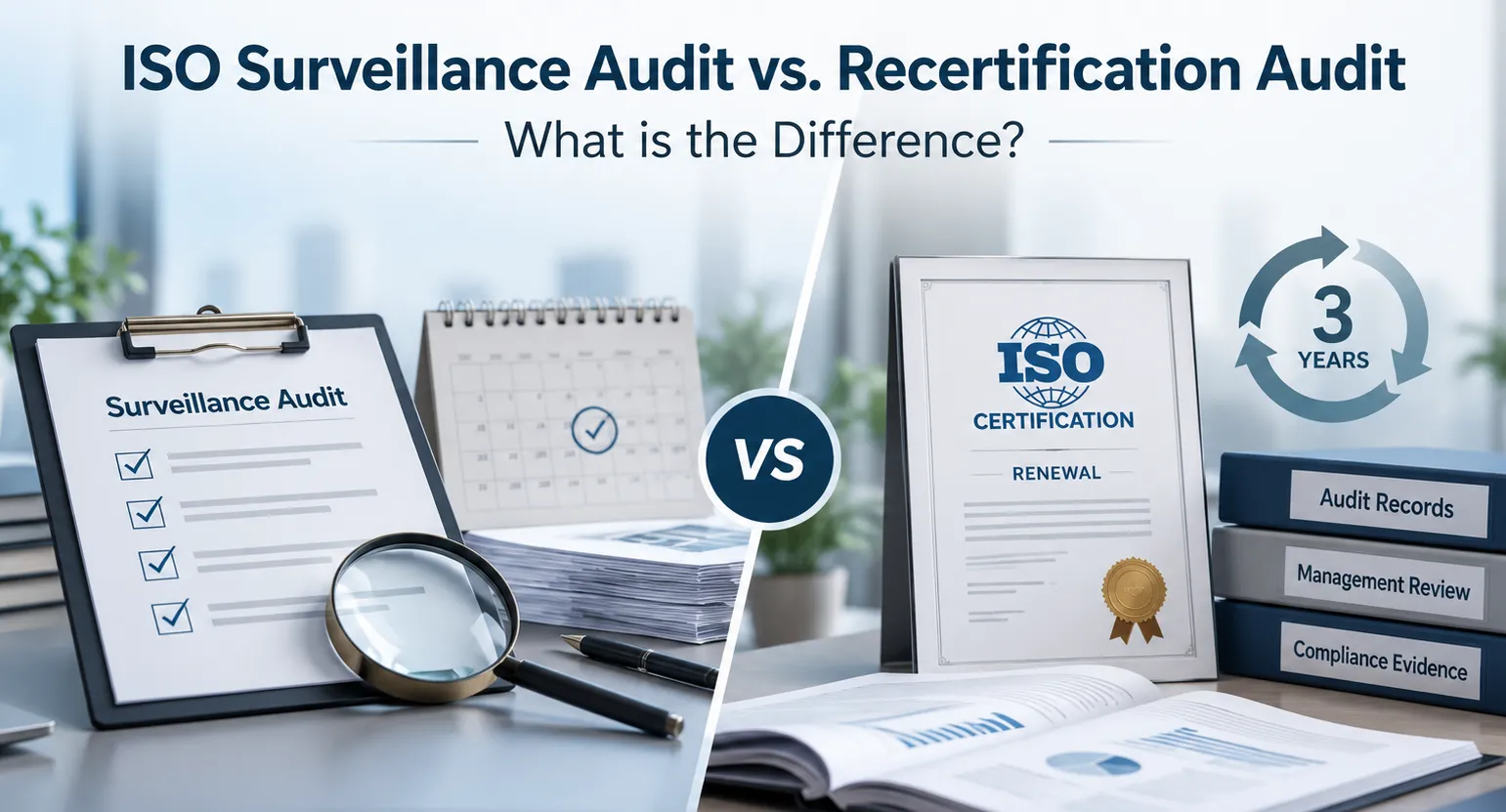
For most accredited ISO management system certifications, the normal certification cycle lasts three years.
After receiving your certificate, your business will generally have a surveillance audit in the first year, another in the second year, and a recertification audit before the certificate expires. The first surveillance audit must normally take place within 12 months of the initial certification decision. These audits help confirm that your management system is still working as required. Some certification schemes follow different arrangements, so ask the certification body to explain your audit schedule in advance.
Check Customer Support, Communication, and Local Audit Coverage
Good communication can make the certification process easier, especially when your company has multiple locations. A certification body doesn’t necessarily need an office in your city. What matters is whether it can arrange suitable auditors, visit your locations when required, and respond to your questions promptly.
Before choosing a provider, ask how audit scheduling, enquiries, and certification-related communication will be handled. You can also ask whether the certification body offers useful digital facilities, such as online applications, secure document sharing, or online certificate verification. These services can make coordination more convenient, but their availability differs between certification bodies. They are helpful extras, not replacements for proper accreditation or competent auditing.
Some certification bodies may also offer general ISO awareness training. If available, this can help employees understand a standard. Such training should remain optional, provide general information rather than solutions tailored to your company’s management system, and must not influence the certification decision.
Read the Agreement Before Signing
Before finalising your decision, review the service agreement carefully. Make sure you understand how future audits will be scheduled, what happens if your company adds new locations or activities, and how you can raise a complaint or appeal a certification decision.
Also, ask about the conditions that could lead to certification being suspended or withdrawn and what would happen if you later wanted to transfer an eligible certificate to another certification body. A clear written agreement helps both sides understand their responsibilities and reduces the chances of misunderstandings later.
Common Mistakes to Avoid When Choosing an ISO Certification Body in India
Even businesses familiar with ISO certification can overlook practical details when choosing a provider. Here are four common mistakes worth avoiding:
- Not identifying the actual certificate issuer. If you’re dealing with an intermediary, confirm which legal certification body will conduct the certification process and issue your certificate.
- Providing incomplete business information. Leaving out a second factory, night shift, or important activity can affect the quotation and audit plan.
- Relying only on verbal promises. Important fees, audit dates, services, and conditions should be confirmed in writing.
- Applying too close to a tender deadline. Audits, corrective actions, and certification decisions take time. Plan early enough to deal with any unexpected delays.
A little preparation before choosing a certification body can save considerable time and confusion later.
How to Make Your Final Decision Between Certification Bodies
By this stage, you should have enough information to compare two or three certification bodies confidently. Start by removing any provider that cannot meet your accreditation or customer requirements. Next, compare the remaining providers based on their industry experience, reputation, proposed audit arrangements, complete certification fees, and ongoing service terms. Finally, ask them to clarify anything you’re unsure about before signing.
You don’t need the certification body with the most additional services or the lowest quotation. You need one that understands your business, explains its work clearly, and can provide the certification you actually require.
Choose an ISO Certification Body That Fits Your Business
Choosing an ISO certification body should leave you with a clear understanding of what will be audited, what your certificate will cover, how much you’ll pay, and what happens after certification. Asking the right questions now can help you avoid unnecessary complications later.
Planning ISO certification for your business in India?
Share the ISO standard you need, your main business activities, the number of locations you want covered, and any customer or tender requirements you’ve received. Contact Guardian Assessment to discuss your certification requirements and understand the next steps.
Frequently Asked Questions
No, not for every ISO management system certificate. However, some customers, government tenders, and particular certification schemes require accredited certification. Check the requirements that apply to your business before choosing a provider.
Yes. You can choose a certification body based in India or overseas, provided it has the necessary competence and can offer certification that meets your business and customer requirements. Its location alone doesn't determine whether it is suitable.
Share the ISO standard you need, your main business activities, employee numbers, working shifts, locations, and the activities you want certified. Include any customer or tender requirements as well. This helps the certification body prepare a more accurate quotation.
Yes, provided the relevant locations are included in the certification scope and meet the applicable requirements. A certificate issued for your head office does not automatically cover every branch, warehouse, or factory.
A consultant can help your business prepare its management system. However, an accredited management system certification body must assess organisations impartially and must not provide management system consultancy to the clients it certifies. Be cautious about offers that combine consultancy with guaranteed certification.