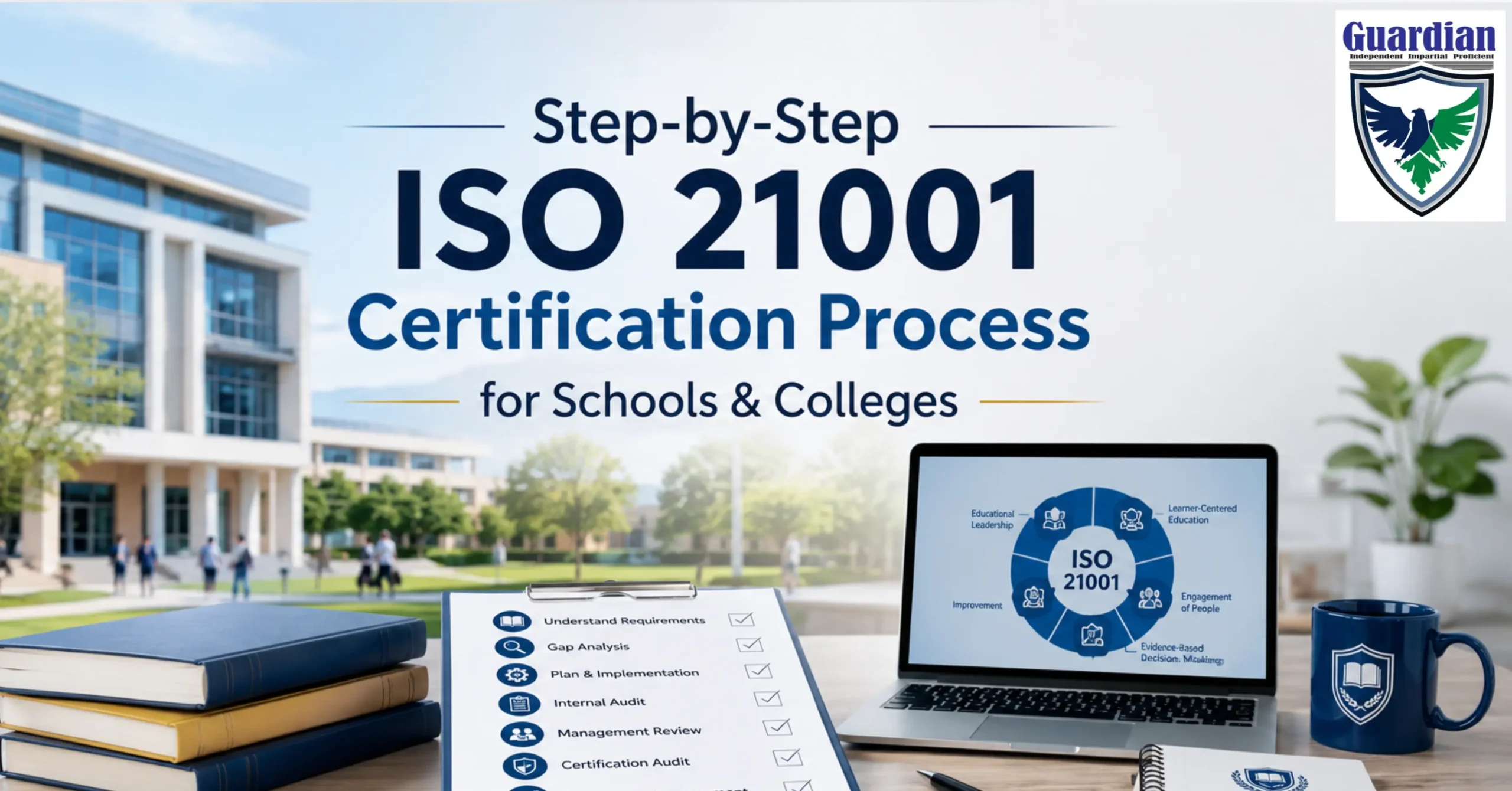
Step-by-Step ISO 21001 Certification Process for Schools & Colleges
A complete, simple guide to ISO 21001 certification using Educational Organizations Management System (EOMS) best practices, from leadership commitment to audits and maintenance.
More consistency: Standardized admissions, teaching, assessments, and feedback reduce confusion and errors.
Better learner experience: Clear processes for engagement, support, and complaints improve satisfaction.
Ongoing improvement: Internal audits and management reviews keep the system effective long after certification.
In today’s competitive education sector, institutions seek ways to demonstrate their commitment to quality, consistency, and learner satisfaction. ISO 21001 certification provides a structured framework through the Educational Organizations Management System (EOMS). This international standard helps schools, colleges, training centers, and other educational providers align their operations with best practices for delivering effective learning experiences.
This comprehensive guide walks you through the ISO 21001 certification process in simple, actionable steps. Whether you manage a small coaching center or a large university campus, these steps offer clear direction for successful implementation.
Table of Contents
- What is ISO 21001?
- Why Follow a Structured ISO 21001 Implementation Guide?
- Step 1: Understand the Standard and Secure Leadership Commitment
- Step 2: Conduct a Gap Analysis
- Step 3: Develop Documentation and Policies
- Step 4: Implement the Educational Organization Management System
- Step 5: Perform Internal Audits and Management Reviews
- Step 6: Choose a Certification Body and Prepare for External Audit
- Step 7: Achieve Certification and Maintain It
- ISO 21001 Requirements: Key Clauses Overview
- Tips for Successful ISO 21001 Implementation in Educational Settings
- Common Challenges and How to Overcome Them
- How to Apply for ISO 21001 Certification
- Conclusion: Building a Sustainable Educational Management System
- Frequently Asked Questions (FAQs)
What is ISO 21001?
ISO 21001 is the global standard for Educational Organizations Management Systems (EOMS). It focuses on helping educational institutions improve their ability to meet learner needs, enhance teaching quality, and ensure consistent service delivery.
Unlike general quality standards, ISO 21001 specifically addresses the unique aspects of education, such as curriculum design, learner engagement, assessment methods, and support services. It follows the Plan-Do-Check-Act (PDCA) cycle, promoting continual improvement across all operations.
Key focus areas include
- Learner-centered approaches
- Leadership commitment
- Resource management
- Operational processes for education delivery
- Performance evaluation and improvement
Achieving ISO 21001 certification shows stakeholders that your institution follows internationally recognized practices for educational management.
Why Follow a Structured ISO 21001 Implementation Guide?
A step-by-step approach ensures nothing is missed during implementation. It reduces confusion, saves time, and builds a robust system that truly benefits daily operations. Many institutions start with good intentions but struggle without clear guidance. This process helps avoid common pitfalls and prepares you effectively for external audits.
Step 1: Understand the Standard and Secure Leadership Commitment
Begin by obtaining the official ISO 21001 standard document and studying its requirements thoroughly. Familiarize key team members with its structure, terminology, and principles.
Key actions in this step
- Form a cross-functional implementation team including academic heads, administrative staff, and support personnel.
- Conduct awareness sessions to explain the benefits of an EOMS for teaching quality and operational efficiency.
- Get top management to demonstrate visible commitment by defining the scope of the EOMS and establishing an educational policy aligned with learner needs.
Leadership involvement is crucial because ISO 21001 emphasizes accountability at the highest level for setting objectives and ensuring resources.
Step 2: Conduct a Gap Analysis
Compare your current practices against ISO 21001 requirements. This is one of the most important early steps in the ISO 21001 implementation guide.
How to perform gap analysis
- Review existing policies, procedures, curriculum documents, admission processes, and feedback mechanisms.
- Use a detailed ISO 21001 audit checklist covering all clauses of the standard.
- Identify strengths and areas needing improvement, such as documentation gaps or inconsistent processes.
- Prioritize actions based on risk and impact on learners.
- Create a detailed action plan with timelines, responsible persons, and required resources. This roadmap guides the entire project.
Step 3: Develop Documentation and Policies
ISO 21001 requires proper documented information to support your management system. Focus on creating practical, usable documents rather than excessive paperwork.
Essential documents typically include
- Educational policy and objectives
- Process maps for key activities (admissions, teaching, assessment, graduation)
- Competence requirements for teaching and support staff
- Risk and opportunity assessment records
- Procedures for handling learner feedback and complaints
- Records of internal audits and management reviews
Make documents simple and tailored to your institution’s size and type. For example, smaller schools can use basic templates while larger colleges may need more detailed procedures.
Step 4: Implement the Educational Organization Management System
Put your plans into action. This is the “Do” phase of the PDCA cycle.
Practical implementation tips
- Train all staff on new or updated processes, especially those related to learner interaction and quality delivery.
- Integrate EOMS requirements into daily routines, for example, standardize lesson planning or feedback collection methods.
- Ensure resources (facilities, equipment, materials) are adequate and properly maintained.
- Establish monitoring mechanisms to track key performance indicators, such as learner satisfaction levels or teaching effectiveness.
- Run the system for a sufficient period (usually several months) to generate evidence of effective operation before moving to audits.
Step 5: Perform Internal Audits and Management Reviews
Internal checks verify whether your system works as intended.
Internal audit process
- Train internal auditors or engage competent personnel.
- Conduct systematic audits using your ISO 21001 audit checklist.
- Document findings, including non-conformities and opportunities for improvement.
- Ensure audits cover all processes and clauses.
Management review meetings should happen at planned intervals. Top leaders review:
- Audit results
- Learner feedback
- Process performance
- Opportunities for improvement
These reviews drive decisions for enhancing the EOMS.
Step 6: Choose an ISO 21001 Certification Body and Prepare for External Audit
Select an accredited ISO 21001 certification body with experience in the education sector. Look for credibility, reputation, and clear certification processes.
The external certification audit usually has two stages
- Stage 1 (Documentation Review): Auditors examine your policies, procedures, and documented information to check readiness.
- Stage 2 (Implementation Audit): On-site evaluation of how effectively you apply the EOMS in practice. They interview staff, observe processes, and review records.
Address any non-conformities identified during the audit by implementing corrective actions.
Step 7: Achieve Certification and Maintain It
Once auditors confirm compliance, you receive your ISO 21001 certificate. This marks the beginning of your certification journey.
Ongoing requirements
- Conduct regular surveillance audits (typically annually) to maintain certification.
- Continue monitoring, measuring, and improving your EOMS.
- Update processes as your institution grows or external conditions change.
- Foster a culture of continual improvement focused on learners and other beneficiaries.
ISO 21001 Requirements: Key Clauses Overview
Understanding the main clauses helps during implementation:
- Context of the Organization: Understand internal/external issues and stakeholder needs.
- Leadership: Demonstrate commitment and establish policy.
- Planning: Address risks, opportunities, and set educational objectives.
- Support: Provide necessary resources, competence, and awareness.
- Operation: Plan and control educational processes effectively.
- Performance Evaluation: Monitor, measure, analyze, and evaluate.
- Improvement: Drive continual enhancement of the system.
Tips for Successful ISO 21001 Implementation in Educational Settings
- Start small and scale up, focus on high-impact areas first.
- Involve teaching staff actively; they are key to successful learner-focused processes.
- Use technology where helpful, such as for tracking feedback or managing documents.
- Keep everything learner-centered, as this is the core principle of the standard.
- Regularly communicate progress to maintain momentum across departments.
For ISO 21001 for online learning platforms or e-learning providers, pay special attention to digital delivery processes, data privacy in learning environments, and virtual support services.
Common Challenges and How to Overcome Them
Many institutions face resistance to change or documentation overload. Address this by explaining the purpose behind each requirement and keeping processes practical. Resource constraints can be managed by phased implementation. Lack of expertise can be resolved through targeted training or external guidance from experienced consultants.
How to Apply for ISO 21001 Certification
After internal readiness:
- Contact accredited ISO 21001 providers or certification bodies.
- Submit your application with necessary details about your organization.
- Schedule audits based on mutual agreement.
- Follow through on any findings to secure certification.
This process demonstrates your commitment to excellence in education management.
Conclusion: Building a Sustainable Educational Management System
Following this step-by-step ISO 21001 certification process helps schools and colleges create a robust framework that supports quality education delivery. It promotes consistency, improves operational efficiency, and strengthens focus on learners.
The journey requires dedication but brings long-term value through better processes and stakeholder confidence. Start with understanding the standard, conduct honest gap analysis, and proceed systematically. Your institution can achieve ISO 21001 certification and set new benchmarks in educational quality.
Remember, certification is not the end goal — continual improvement is what truly transforms educational organizations.
Frequently Asked Questions (FAQs)
Ans) ISO 21001 is specifically designed for educational organizations with a strong learner focus, while ISO 9001 is a general quality management standard. ISO 21001 addresses unique aspects like curriculum development and learner satisfaction more directly.
Ans) The timeline varies based on institution size and current readiness. It generally takes 6 to 18 months from gap analysis to certification, including implementation and audit periods.
Ans) No, it is voluntary. However, many institutions pursue it to demonstrate commitment to quality and gain competitive advantages in the education sector.
Ans) Yes. The standard is flexible and scalable. Small schools and coaching centers can implement simplified processes that still meet requirements effectively.
Ans) You must maintain the system through regular internal reviews, surveillance audits, and continual improvement activities to keep the certification valid.