What is ISO 14001 and Its Role in Environmental Management in Your Organization
If you want your business to be known for caring about the environment, ISO 14001 can help you. It might sound complicated, but this guide explains the ISO 14001 Environmental Management System (EMS) in simple words, with real-life examples, clear requirements, and practical benefits.
What ISO 14001 is: A global standard for setting up an Environmental Management System (EMS).
What it helps with: Managing waste, energy, resources, and environmental risks.
Who can use it: Any organization (small or large, manufacturing or services).
Table of Contents
- What is ISO 14001?
- Understanding the ISO 14001 Environmental Management System
- ISO 14001 Requirements Explained
- How Does ISO 14001 Work?
- ISO 14001 Environmental Management Principles
- Role of ISO 14001 in Organizational Environmental Management
- Benefits of ISO 14001 for Organizations
- ISO 14001 Overview for Businesses – Key Takeaways
- ISO 14001 Around the World
- The Guardian Assessment ISO 14001 Approach
- ISO 14001 EMS Overview – A Real-World Example
- Frequently Asked Questions on ISO 14001
- Conclusion and Next Steps
What is ISO 14001?
ISO 14001 is an international standard that helps organizations set up an Environmental Management System (EMS). You can think of the ISO 14001 EMS as a practical set of steps that help your business become more eco-friendly and meet expectations from governments, customers, and communities.
Simple meaning: ISO 14001 gives your business a clear plan to manage and improve how you affect the environment, like resource use, waste handling, pollution control, and energy saving.
Many people ask: “What is ISO 14001 environmental management system?” In simple terms, it is a system for organizing, tracking, and improving how your company interacts with the environment.
Understanding the ISO 14001 Environmental Management System
An Environmental Management System (EMS) is a set of processes and documents a company uses to identify and control its impact on the environment.
Understanding ISO 14001 means remembering these 3 points:
- It’s not a fixed list of rules; it’s a system you can adapt to your company.
- It’s about continuous improvement, not a one-time action.
- It works for all organizations: big, small, manufacturing, or services.
Easy overview: You choose goals, track progress, and improve step by step.
ISO 14001 Requirements Explained
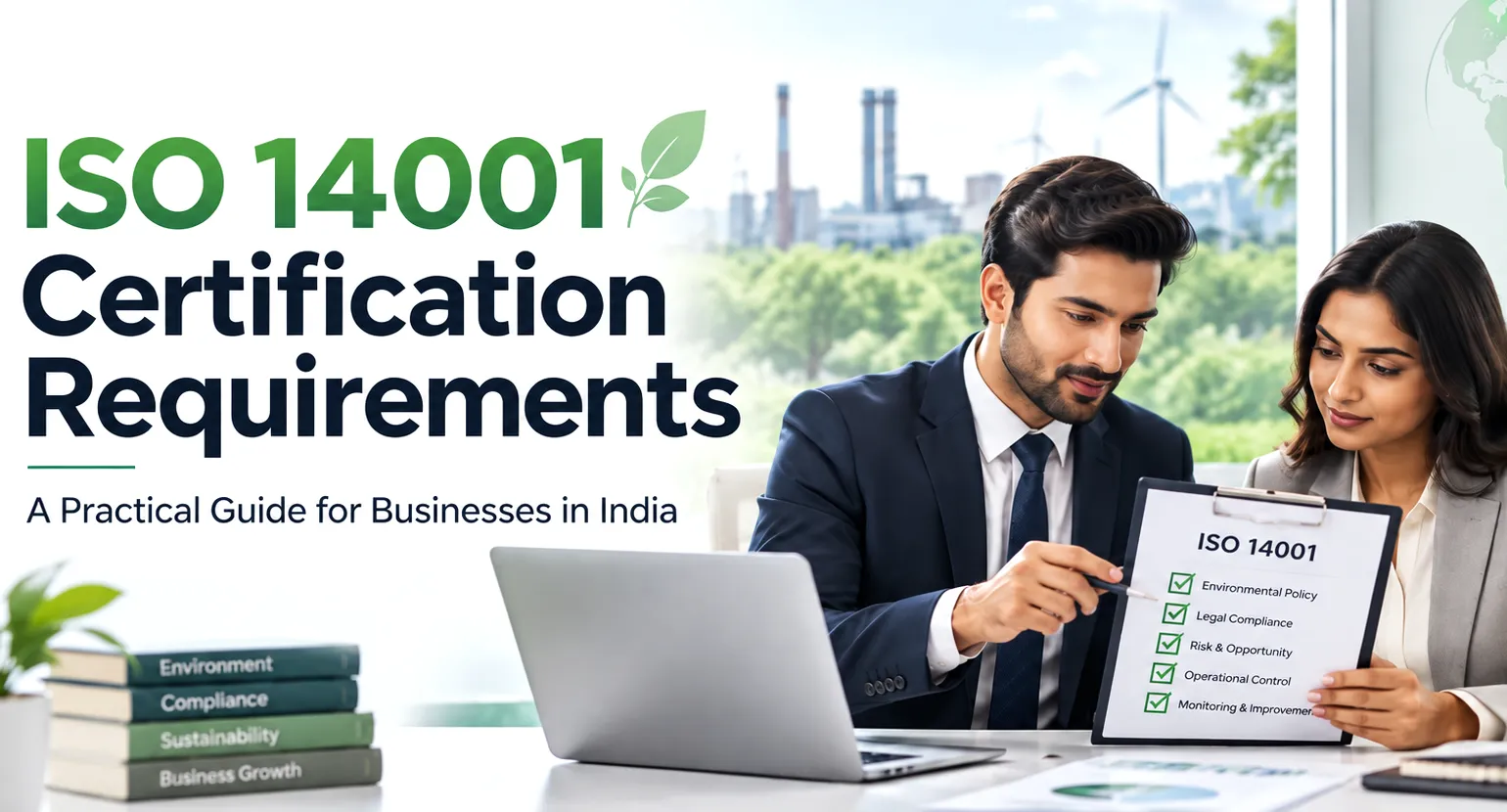
A common question is: “What are ISO 14001 requirements?” Here is a simple breakdown you can understand easily:
Commitment and Leadership: Top management must support EMS and lead by example.
Environmental Policy: A clear policy that explains your environmental goals.
Planning: Identify environmental impacts, legal requirements, and set targets.
Support and Operation: Train staff, define responsibilities, and ensure resources.
Performance Evaluation: Track results, conduct audits, and do management reviews.
Improvement: Fix issues, take corrective actions, and keep improving.
These steps form the EMS standard that organizations can follow, no matter what they do. Once you break it into daily routines, it becomes very manageable.
How Does ISO 14001 Work?
ISO 14001 works using the Plan–Do–Check–Act (PDCA) cycle. It’s a simple loop that helps you improve regularly.
Plan
- Identify impacts (energy, waste, pollution)
- Set environmental targets
- Plan actions and legal controls
Do
- Implement the plan
- Train employees and assign responsibilities
- Maintain records and follow procedures
Check
- Measure performance (water, waste, energy)
- Audit to confirm processes are followed
- Collect feedback on what works and what doesn’t
Act
- Correct issues and prevent repeat problems
- Raise targets when you achieve goals
- Keep improving step by step
ISO 14001 Environmental Management Principles
ISO 14001 environmental management principles are the foundation of responsible environmental performance.
- Prevention first: Stop pollution before it begins.
- Follow the rules: Meet laws and regulations.
- Set clear goals: Create targets everyone understands.
- Train and involve everyone: Make employees part of the solution.
- Review and improve: Keep checking and upgrading your EMS.
- Transparency: Share progress with stakeholders when needed.
Role of ISO 14001 in Organizational Environmental Management
The role of ISO 14001 is simple: it provides a roadmap for cleaner, more responsible business operations.
- Helps identify environmental risks from daily operations.
- Supports meeting legal requirements and reduces chances of fines.
- Builds a clear approach to improve resource use, waste handling, and emissions.
Example: A factory may recycle water and reduce pollution. An office may cut paper use and save energy through smarter controls.
Benefits of ISO 14001 for Organizations
Here are the top benefits in plain language:
1) Legal compliance: Helps you stay updated with environmental laws.
2) Reduced waste and costs: Efficient resource use lowers bills and reduces waste.
3) Better reputation: Shows customers and investors you take environmental responsibility seriously.
4) New opportunities: Can support access to new markets and tenders.
5) Happier employees: Teams feel proud and gain skills in sustainability.
6) Continuous improvement: Keeps you improving with new targets.
7) Prepared for the future: Easier to adapt to stricter rules and customer expectations.
ISO 14001 Overview for Businesses – Key Takeaways
| Area | Details |
|---|---|
| What’s involved? | Policies, responsibilities, goals, monitoring, measurement, and improvement. |
| Who does it help? | All organizations: factories, offices, retailers, hotels, hospitals, and more. |
| Why do it? | Greener operations, better efficiency, and stronger trust. |
| Is it hard? | Not if you break it into simple, step-by-step actions. |
| Who can help? | Experts like Guardian Assessment Environmental Management. |
Think of ISO 14001 as a map for your eco-journey. You decide where you want to go, and the standard helps guide you.
ISO 14001 Around the World
America: Helps companies save energy, follow rules, and show environmental responsibility.
Asia: Supports cleaner air and water by improving factory and office practices.
Europe: Widely adopted to recycle more, waste less, and meet strict regulations.
Africa: Helps protect natural resources, improve water use, and support sustainability.
Australia: Useful for saving water, protecting nature, and managing climate challenges.
Middle East: Supports saving resources like water and reducing waste in limited-resource regions.
South America: Helps protect rainforests and rivers by improving farming and industrial practices.
The Guardian Assessment ISO 14001 Approach
Guardian Assessment ISO 14001 supports businesses at every stage of their environmental journey. Whether you are new to environmental management or upgrading your EMS, the team helps you understand the standard clearly.
- How to use ISO 14001 to build practical routines for daily work.
- Best ways to involve your team.
- How to prepare the documents needed for certification.
- How to measure and celebrate achievements.
With Guardian Assessment ISO 14001, you get guidance for training, audits, and continuous improvement so you understand requirements and feel prepared.
ISO 14001 Environmental Management System Overview – A Real-World Example
Example: Suppose you run a hotel. You notice that washing towels every day wastes water and energy. You add a simple note asking guests to leave towels on the floor only if they want them washed.
This small change reduces water use and energy consumption. You track the savings, report them, and then look for the next improvement. That’s ISO 14001 in action: simple, measurable, and continuous improvement.
Final Thoughts: Why ISO 14001 Matters for Your Business Today
If you ever wondered, “What is ISO 14001 and how does it help my business?” now you have a clear answer. ISO 14001 makes environmental management practical and step-by-step, whether you are small or growing.
Start small:
- Review your organization’s environmental impact.
- Understand ISO 14001 requirements and set simple goals.
- Involve everyone from management to staff.
- Consider expert support from Guardian Assessment Environmental Management.
Becoming eco-friendly is good for the planet and good for business. With ISO 14001, you build a trusted EMS standard and a stronger reputation for responsible operations.
Frequently Asked Questions on ISO 14001
Ans) ISO 14001 is an international standard that outlines a framework for organizations to establish an effective Environmental Management System (EMS), helping them identify, manage, and reduce their environmental impacts through structured processes and continual improvement.
Ans) It operates on the Plan-Do-Check-Act (PDCA) cycle: Plan by setting environmental goals and policies; Do by implementing actions; Check by monitoring and evaluating performance; and Act by making improvements based on findings for ongoing enhancement.
Ans) Any organization, regardless of size, industry, or location, that wants to improve its environmental performance, ensure legal compliance, and demonstrate commitment to sustainability can benefit from following ISO 14001—it's voluntary but widely adopted globally.
Ans) Key principles include prevention of pollution, compliance with legal requirements, setting achievable environmental objectives, engaging employees, conducting regular reviews, and promoting transparency to foster a culture of continual environmental improvement.
Ans) An EMS standard, like ISO 14001, is a globally recognized framework that provides guidelines for organizations to systematically manage their environmental responsibilities, minimize risks, and enhance sustainability without prescribing specific performance levels.
Ans) The primary purpose is to help organizations minimize their environmental footprint, achieve compliance with regulations, and drive continual improvement in environmental performance, leading to better resource efficiency and a positive reputation.
Ans) Core requirements include leadership commitment, an environmental policy, identifying aspects and impacts, setting objectives, operational controls, performance evaluation through audits, and actions for continual improvement—all adaptable to any organization's context.