Case Studies: How ISO 14001 Transformed Environmental Performance
Real-world-inspired examples showing how EMS certification improves waste reduction, energy efficiency, compliance, and sustainability.
Waste reduction: Identify major waste streams, reduce at source, and improve segregation and recycling.
Energy efficiency: Monitor consumption, fix leaks, optimize processes, and improve maintenance discipline.
Compliance strength: Build structured controls that reduce incident risk and improve audit readiness.
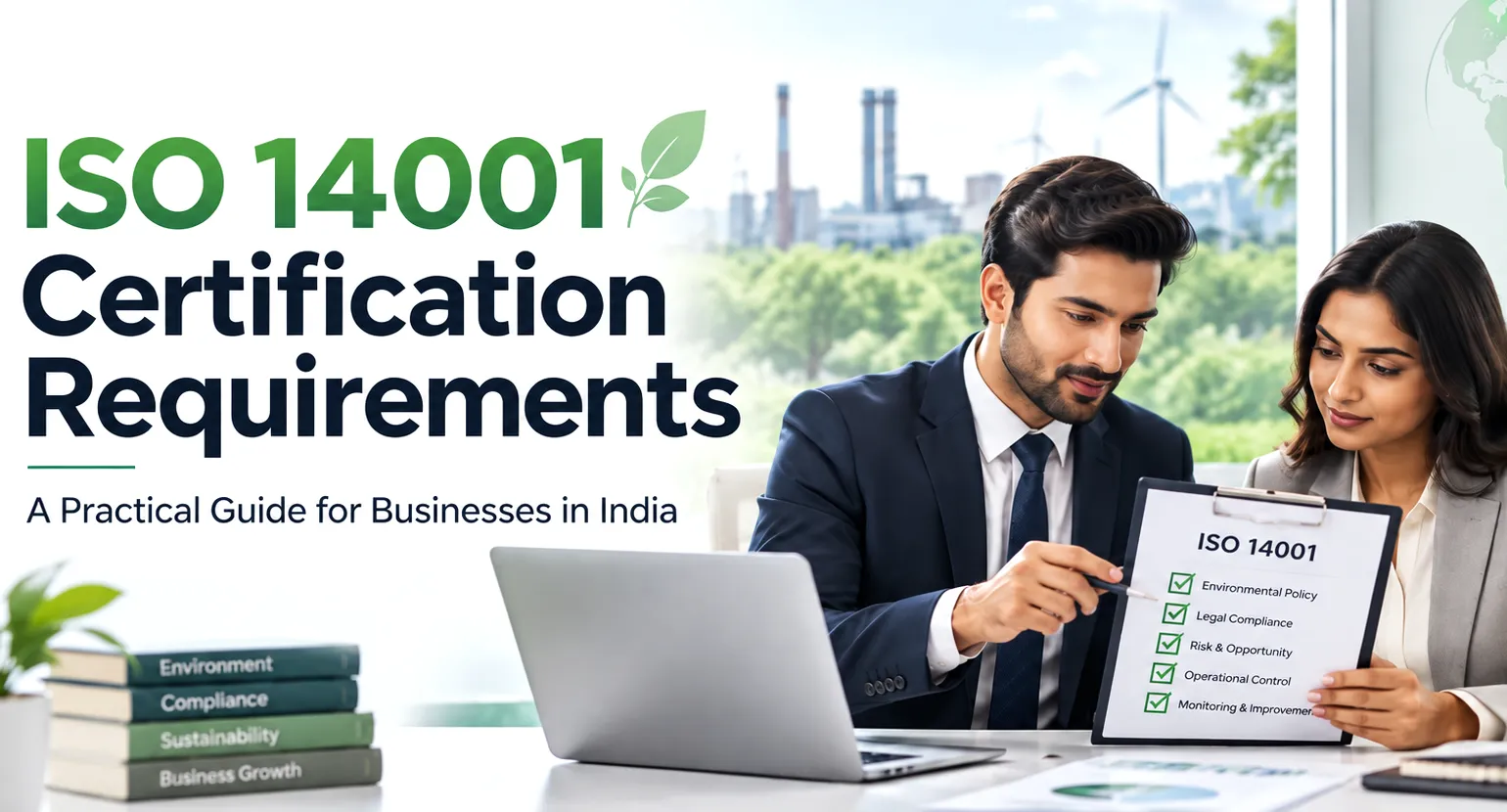
In today’s world, businesses face growing pressure to operate responsibly toward the environment. Many organizations turn to ISO 14001, the leading international standard for Environmental Management System (EMS) certification. This framework helps companies identify, manage, monitor, and reduce their environmental impacts systematically.
This detailed guide shares real-world-inspired case studies showing how ISO 14001 certification drives meaningful change. You will discover practical transformations in waste reduction, energy efficiency, compliance, and overall sustainability — without focusing on any specific locations. The content uses easy language, actionable insights, and naturally placed terms like ISO 14001 requirements, EMS certification, and how to reduce environmental impact with ISO 14001.
Table of Contents
- What is ISO 14001 and Its Core Role in Environmental Management
- Why Organizations Pursue ISO 14001 Certification
- Case Study 1: Manufacturing Company Achieves Major Waste Reduction
- Case Study 2: Construction Firm Builds Sustainability into Projects
- Case Study 3: Food Processing Unit Focuses on Resource Efficiency
- Case Study 4: Service-Oriented Business Reduces Its Carbon Footprint
- Common Patterns of Transformation Across Cases
- How ISO 14001 Supports Long-Term Environmental Performance
- Practical Tips for Successful ISO 14001 Implementation
- Measuring Success: Key Performance Indicators
- Challenges and How to Overcome Them
- The Future of Environmental Management with ISO 14001
- Frequently Asked Questions (FAQs)
What is ISO 14001 and Its Core Role in Environmental Management
ISO 14001 is a globally recognized standard that provides a structured approach to building an effective Environmental Management System. It focuses on continual improvement rather than prescribing exact performance levels. Organizations of any size or sector can adopt it.
Key elements include
- Identifying environmental aspects and impacts
- Setting objectives and targets
- Ensuring legal compliance
- Engaging employees and stakeholders
- Conducting regular audits and reviews
By implementing ISO 14001 clauses, businesses move from reactive environmental handling to proactive, strategic management. This builds a culture of responsibility that benefits both the planet and operations.
Why Organizations Pursue ISO 14001 Certification
Businesses adopt ISO 14001 certification for several compelling reasons:
- Stronger regulatory compliance and reduced risk of penalties
- Enhanced reputation as a green brand
- Operational efficiencies leading to resource savings
- Better stakeholder and customer trust
- Competitive advantage in tenders and supply chains
It integrates well with other standards, such as how to integrate ISO 14001 with ISO 9001 for streamlined management systems.
Case Study 1: Manufacturing Company Achieves Major Waste Reduction
Consider a mid-sized manufacturing firm producing metal components. Before EMS certification, the company generated high volumes of scrap, wastewater, and emissions. Processes were inefficient, leading to rising disposal costs and occasional compliance issues.
After implementing ISO 14001
- The team conducted a thorough environmental aspects review and identified key impact areas.
- They introduced recycling programs for metal scraps and optimized chemical usage in treatment processes.
- Employee training programs raised awareness, encouraging suggestions for improvement.
Results
- Significant reduction in waste sent to landfills
- Improved water recycling rates
- Better energy efficiency through equipment upgrades and process changes
- Stronger compliance record with fewer incidents
This case highlights how ISO 14001 for manufacturing industry turns environmental challenges into opportunities for efficiency and cost control. The structured approach of the standard made these gains sustainable and measurable.
Case Study 2: Construction Firm Builds Sustainability into Projects
A construction company faced challenges with dust, noise, waste materials, and resource consumption on project sites. Clients began demanding greener practices, prompting the firm to pursue ISO 14001 certification.
Implementation steps
- Developed site-specific environmental management plans
- Trained workers on waste segregation and pollution prevention
- Partnered with suppliers for eco-friendly materials
- Monitored key performance indicators regularly
Transformations observed
- Reduced construction waste through better planning and reuse of materials
- Lowered fuel and energy use on sites via optimized logistics
- Improved community relations due to minimized disturbances
- Enhanced ability to meet tender requirements for environmentally responsible projects
This example shows the value of ISO 14001 for construction companies. The standard provides a flexible framework that adapts to project-based work while driving consistent improvements.
Case Study 3: Food Processing Unit Focuses on Resource Efficiency
A food processing organization dealt with high water usage, organic waste, and energy demands for refrigeration and heating.
Adopting ISO 14001 requirements involved
- Mapping environmental impacts across the production cycle
- Installing water-saving technologies and treatment systems
- Implementing energy monitoring and preventive maintenance
- Setting measurable targets for waste reduction and tracking progress
Key outcomes
- Notable decrease in water consumption per unit of production
- Higher rates of organic waste composting or conversion to biogas
- Reduced energy bills through efficiency measures
- Improved product quality perception among eco-conscious buyers
This demonstrates how to reduce environmental impact with ISO 14001 in resource-intensive sectors. The continual improvement cycle (Plan-Do-Check-Act) ensured long-term gains.
Case Study 4: Service-Oriented Business Reduces Its Carbon Footprint
Even non-manufacturing organizations benefit. A logistics and warehousing company implemented an Environmental Management System Certification to address fuel consumption, packaging waste, and facility energy use.
Actions taken
- Route optimization software and driver training for fuel efficiency
- Shift toward recyclable and minimal packaging
- LED lighting and energy-efficient equipment in warehouses
- Regular internal audits to maintain standards
Benefits realized
- Lower operational emissions
- Cost savings on fuel and utilities
- Positive feedback from clients preferring sustainable partners
- Easier alignment with broader corporate sustainability goals
This case proves ISO 14001 applies across industries, supporting credible EMS certification processes for real performance improvement.
Common Patterns of Transformation Across Cases
From these examples, several success factors emerge:
- Leadership commitment: Top management drives the EMS and provides resources.
- Employee involvement: Training and engagement lead to innovative ideas.
- Data-driven decisions: Monitoring and measurement track real progress.
- Supplier collaboration: Extending the system beyond company boundaries.
- Continual improvement: Regular reviews prevent complacency.
Organizations often see benefits in compliance, efficiency, and reputation simultaneously.
How ISO 14001 Supports Long-Term Environmental Performance
ISO 14001 emphasizes the Plan-Do-Check-Act cycle, ensuring environmental efforts evolve with the business. It helps organizations identify and control risks proactively, capitalize on opportunities for greener innovation, and integrate sustainability into daily operations.
Many businesses report smoother audits, better preparedness for regulatory changes, and stronger brand value after certification.
Practical Tips for Successful ISO 14001 Implementation
- Start with a gap analysis against ISO 14001 requirements.
- Engage internal expertise or seek support if internal knowledge is limited.
- Develop clear policies, procedures, and objectives.
- Invest in employee training at all levels.
- Choose an experienced ISO 14001 certification body for impartial audits.
- Maintain records and conduct internal audits regularly.
- Review and update the system based on performance data.
For beginners, following a step-by-step guide to ISO 14001 certification process helps avoid common pitfalls.
Measuring Success: Key Performance Indicators
Effective EMS implementations track indicators such as:
- Waste generation rates
- Energy and water consumption per unit output
- Emission levels
- Compliance incident frequency
- Employee participation in improvement initiatives
These metrics demonstrate tangible transformation and support informed decision-making.
Challenges and How to Overcome Them
Some organizations face initial hurdles like resource constraints or resistance to change. Solutions include phased implementation, clear communication of benefits, and seeking professional support when needed. Over time, the system becomes part of the organizational culture, making improvements easier to sustain.
ISO 14001 is not only for large enterprises — small and medium businesses also achieve excellent results with tailored approaches.
The Future of Environmental Management with ISO 14001
As sustainability expectations rise, ISO 14001 certification positions businesses for resilience and growth. It supports innovation in areas like circular economy practices, life cycle thinking, and stakeholder engagement.
By focusing on how to reduce environmental impact with ISO 14001, companies contribute positively while strengthening their bottom line.
Frequently Asked Questions (FAQs)
Ans) ISO 14001 helps organizations establish an effective Environmental Management System to minimize negative impacts, ensure compliance, and drive continual improvement in environmental performance.
Ans) Yes. The standard is flexible and scalable. Small companies can implement it proportionally to their operations and still gain significant benefits in efficiency and reputation.
Ans) Timelines vary based on company size and readiness, but many organizations complete the process within 6 to 18 months with proper planning and support.
Ans) It provides a framework for improvement rather than fixed targets. Actual results depend on the objectives set by the organization and effective implementation.
Ans) Absolutely. It integrates easily with standards like ISO 9001 for quality management, creating a unified system that reduces duplication and improves overall efficiency.